
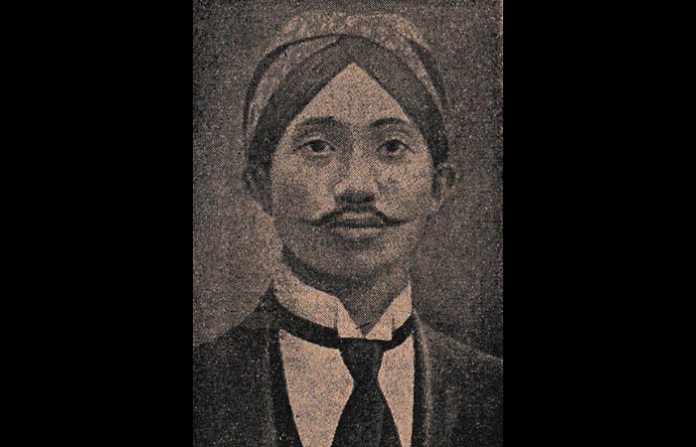

RADAR TULUNGAGUNG – HOS Tjokroaminoto, widely known as the “Uncrowned King of Java,” emerged as one of the most influential figures in Indonesia’s nationalist movement by transforming Sarekat Islam into the largest mass organization of the colonial era and mentoring future leaders who would shape the nation’s political destiny. His legacy continues to be recognized as a cornerstone of Indonesia’s struggle for equality, self-governance, and independence.
Born on August 16, 1882, in Bakur, Madiun Residency, East Java, Haji Oemar Said (HOS) Tjokroaminoto came from a Javanese aristocratic family. Despite his noble background and the title “Raden Mas,” he rejected feudal privileges and promoted the principle that all people were equal regardless of social status. This egalitarian outlook would later become central to his political and social activism.
After graduating from OSVIA, a colonial administrative school in Magelang, Tjokroaminoto briefly worked in the Dutch colonial bureaucracy. However, dissatisfaction with feudal practices and hierarchical customs led him to resign and pursue a different path, eventually settling in Surabaya, where he worked in private companies and developed a reputation as a prolific writer and public speaker.
Rise of HOS Tjokroaminoto and the Growth of Sarekat Islam
Tjokroaminoto’s political influence expanded rapidly after he joined Sarekat Islam, an organization that evolved from Sarekat Dagang Islam under the leadership of Haji Samanhudi. By 1912, he had become a leading figure in the movement and soon rose to head the organization’s central leadership.
His exceptional oratory skills attracted massive audiences across the Dutch East Indies. Colonial authorities reportedly viewed his influence with concern as thousands attended his speeches, helping Sarekat Islam grow into the largest indigenous political organization of its time. The Dutch later referred to him as the “Uncrowned King of Java,” reflecting the extraordinary authority he held among ordinary Indonesians.
Tjokroaminoto also championed the idea of self-government long before Indonesia declared independence. During Sarekat Islam’s national congress in Bandung in 1916, he called for greater political autonomy and broader representation for indigenous people within the colonial system. His demands helped nurture an emerging sense of Indonesian national consciousness.
How Sarekat Islam Became the Largest Mass Organization in Colonial Indonesia
Under Tjokroaminoto’s leadership, Sarekat Islam expanded at an unprecedented pace. Historical records indicate the organization established around 180 branches throughout the Dutch East Indies within a few years of its expansion. Membership surged dramatically, making it the largest mass movement in colonial Indonesia. Contemporary accounts and historical studies often cite membership figures reaching approximately 2.5 million by the late 1910s, although estimates vary among historians.
Beyond organizational growth, Tjokroaminoto promoted social justice issues, including opposition to forced labor and support for marginalized communities. He also served in the Volksraad, the colonial advisory council, beginning in 1918, where he advocated political reforms and broader public participation in governance.
One of his most enduring contributions was his role as a mentor. His residence on Peneleh Street in Surabaya became a gathering place for young activists. Among those influenced by him was Indonesia’s future first president, Sukarno, who later openly acknowledged Tjokroaminoto as his teacher.
Legacy of the Uncrowned King of Java and Teacher of Indonesia’s Leaders
The later years of Tjokroaminoto’s leadership were marked by ideological tensions within Sarekat Islam. Disagreements between socialist and Islamic factions eventually led to organizational divisions, weakening the movement’s dominance as new political parties emerged during the 1920s. Nevertheless, Tjokroaminoto remained a central figure in nationalist politics through the transformed Partai Sarekat Islam Indonesia (PSII).
He died in Yogyakarta on December 17, 1934, at the age of 52. Although he did not live to witness Indonesian independence in 1945, his ideas profoundly influenced several generations of nationalist leaders. In recognition of his contributions to the independence movement, President Sukarno designated Tjokroaminoto a National Hero of Indonesia in 1961.
Tjokroaminoto’s commitment to equality, political awakening, and national self-determination continues to secure his place among the most significant architects of modern Indonesian nationalism.
More than nine decades after his death, HOS Tjokroaminoto remains remembered not only as the leader who transformed Sarekat Islam into a powerful national movement but also as the “teacher of the nation” whose influence shaped future leaders and helped lay the intellectual foundations of an independent Indonesia.
HOS Tjokroaminoto transformed Sarekat Islam into a mass movement and inspired Indonesia’s future leaders in the fight for independence.