

RADAR TULUNGAGUNG – The history of Nusa Tenggara Timur reflects centuries of colonial rivalry, regional transformation, and cultural resilience that helped shape eastern Indonesia. From Portuguese and Dutch competition over the spice trade to the province’s official establishment in 1958, Nusa Tenggara Timur holds a strategic place in Indonesia’s historical development.
Colonial Powers and the Early History of Nusa Tenggara Timur
The history of Nusa Tenggara Timur began long before Indonesia’s independence, when local kingdoms across Timor, Flores, Sumba, and Alor-Pantar controlled trade routes and regional governance. After 1908, many of these kingdoms changed their status into “swapraja,” or self-governing territories under colonial administration.
Historical records cited in the transcript show that at least 10 swapraja existed in Timor, 15 in Sumba, nine in Flores, and seven in the Alor-Pantar region. These territories later became smaller administrative units known as “kefetoran.”
Portuguese influence in NTT grew as European powers competed for control of the spice trade across the Indonesian archipelago. One of the local ethnic groups known for spice production was the Bunak tribe, whose territory attracted Portuguese commercial interests.
The Portuguese expanded forced cultivation systems and trade monopolies in the region. However, Dutch colonial forces gradually displaced Portuguese authority after seizing the Portuguese fort in Solor in 1613.
In 1735, the Dutch secured agreements with several kings in Timor, Solor, and Sumba. The treaties granted the Dutch monopoly rights over trade while local rulers acknowledged Dutch sovereignty.
Despite these agreements, territorial disputes between the Netherlands and Portugal continued for decades. The conflict only eased after the Lisbon Treaty signed on June 10, 1893, which formally established border divisions in the region.
Japanese Occupation and the Formation of Modern NTT
The arrival of Japanese forces in 1942 marked the collapse of Dutch colonial administration in NTT during World War II. According to the historical review, the Japanese occupation did not drastically alter the administrative structure in the region, although several official terms and governance systems changed.
After Japan surrendered to Allied forces in 1945, Dutch authorities attempted to regain control over Nusa Tenggara Timur. Local resistance, however, disrupted those efforts as nationalist sentiment spread across Indonesia.
A major turning point came in 1946 during the Denpasar Conference, which led to the establishment of the State of East Indonesia. The political entity consisted of 14 regions, including three territories from present-day NTT: Timor, Flores, and Sumba.
Administrative reforms continued in the post-independence era. Government Regulation No. 21 of 1950 established the administrative region of Sunda Kecil, with NTT included as part of the territory.
Four years later, Emergency Law No. 9 of 1954 officially changed the name Sunda Kecil to Nusa Tenggara. The transformation culminated in Law No. 64 of 1958, which divided the former province into three Level I regions: Bali, Nusa Tenggara Barat, and Nusa Tenggara Timur.
The legal division officially confirmed NTT as a separate province within the Republic of Indonesia.
Tourism and Cultural Heritage Continue to Define NTT
Today, Nusa Tenggara Timur is internationally recognized not only for its historical legacy but also for its natural and cultural attractions. The province hosts several destinations considered unique on a global scale.
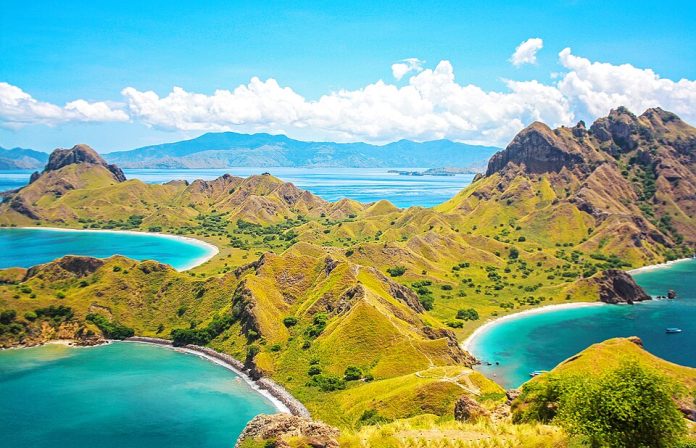
Among the most famous is the Komodo National Park, home to the Komodo dragon, the world’s largest lizard species. The province also features the three-colored crater lakes of Kelimutu, which remain one of Indonesia’s most iconic volcanic landscapes.
Another cultural attraction is the traditional whale hunting practice in Lamalera, located in Lembata Regency, where local communities continue centuries-old maritime traditions.
Several emerging tourism destinations are also gaining attention, including Liman Beach on Semau Island near Kupang, the Mulut Seribu waters in Rote Ndao, and traditional villages in East Sumba.
The history of Nusa Tenggara Timur continues to influence the province’s identity today, blending indigenous traditions, colonial-era legacies, and modern tourism development into one of Indonesia’s most distinctive regions.