
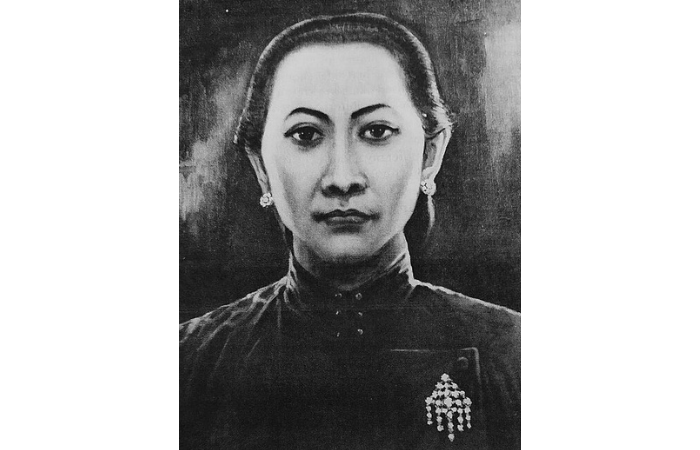

RADAR TULUNGAGUNG – Nyi Ageng Serang emerged as one of the most feared female commanders in Indonesian history after leading guerrilla resistance against Dutch colonial forces during the Java War in the early 19th century. Despite being in her seventies, she continued fighting on the front lines and became a trusted military adviser to Prince Diponegoro.
The Rise of Nyi Ageng Serang as a Female War Commander
Born around 1752 in Serang Village on the border of Grobogan and Sragen in Central Java, Nyi Ageng Serang grew up in a noble Mataram family deeply involved in anti-colonial resistance. Her real name was Kustiah Wulaningsih Retno Edi, and she was the daughter of Panembahan Notoprojo, a local leader and military figure who opposed Dutch interference in the Mataram Kingdom.
From childhood, Nyi Ageng Serang trained in horseback riding, weapon handling, and guerrilla warfare under her father’s guidance. At a time when Dutch colonial authorities tightened control over trade, taxation, and local kingdoms, her family openly resisted foreign domination.
The political situation in Java worsened after the 1755 Giyanti Agreement divided the Mataram Kingdom into the Yogyakarta Sultanate and the Surakarta Sunanate. Although the treaty temporarily ended large-scale conflict, many Javanese nobles believed the Dutch would continue expanding their influence.
Their fears soon proved correct.
Dutch forces later attacked Serang Village after suspecting local resistance activities. During the assault, Nyi Ageng Serang entered the battlefield alongside her brother, Putro Notoprojo, for the first time. The battle ended in heavy losses for local fighters, including the death of her brother. Soon afterward, both of her parents also died, leaving her determined to continue the family’s struggle against colonial rule.
Over the following years, Nyi Ageng Serang strengthened her military skills and built alliances with anti-Dutch nobles in Yogyakarta. She later married Panembahan Serang, another resistance figure who shared her commitment to defending local communities from colonial control.
Dutch Crackdowns and the Road to the Java War
Political tensions escalated sharply in the early 19th century after Dutch and British authorities repeatedly intervened in Yogyakarta’s royal succession disputes.
In 1811, Governor-General Herman Willem Daendels removed Sultan Hamengkubuwono II from power after accusing him of planning resistance alongside Nyi Ageng Serang and other nobles. Just one year later, British forces under Sir Stamford Raffles attacked Yogyakarta during the 1812 assault known as Geger Sepehi, one of the most traumatic episodes in Javanese court history.
The Dutch later exiled Sultan Hamengkubuwono II and several royal family members to Penang and Ambon. The arrests deeply angered Nyi Ageng Serang because several of those exiled were connected to her family through marriage.
The situation became even more personal after her daughter, Kustina, died following prolonged emotional distress caused by the political turmoil and family separations.
By 1825, Dutch authorities intensified land seizures, imposed heavier taxes, and arrested local religious leaders and nobles suspected of supporting rebellion. The attempted arrest of Prince Diponegoro on July 20, 1825, triggered the outbreak of the Java War, one of the largest anti-colonial conflicts in Indonesian history.
Recognizing her experience and knowledge of rural warfare, Prince Diponegoro appointed Nyi Ageng Serang as a military adviser despite her advanced age. At the time, she was already 73 years old.
Guerrilla Warfare and the Famous Taro Leaf Strategy
During the Java War, Nyi Ageng Serang led resistance operations across Purwodadi, Grobogan, Kudus, Pati, and Demak in Central Java. She became the only prominent female field commander in the conflict.
One of her most famous tactics involved disguising battlefield traps with taro leaves. Her forces dug hidden pits along routes frequently used by Dutch troops, covered them with slippery mud and taro leaves, then launched surprise attacks after enemy soldiers fell into the concealed holes.
The strategy proved highly effective in weakening Dutch patrols and allowed her fighters to seize weapons from colonial troops.
Her forces also targeted Dutch logistics centers, destroyed supply routes, and burned weapons depots. Local villagers joined her movement as her reputation spread throughout Central Java.
Dutch commanders eventually responded with larger military deployments, including artillery and trained infantry units. Heavy fighting in Demak reportedly lasted for hours and caused significant casualties on both sides. Many of Nyi Ageng Serang’s followers were later executed after capture.
Despite suffering losses, she refused to surrender and continued supporting guerrilla campaigns until declining health forced her to withdraw to Prambanan.
Before leaving the battlefield, she reportedly told Prince Diponegoro, “I still choose war. This is about the fate of our people.”
Nyi Ageng Serang died in 1828 at the age of 76 and was buried in Kulon Progo, Yogyakarta. Indonesia officially recognized her as a National Hero on December 13, 1974, honoring her role as one of the country’s most influential female resistance leaders against Dutch colonial rule.