
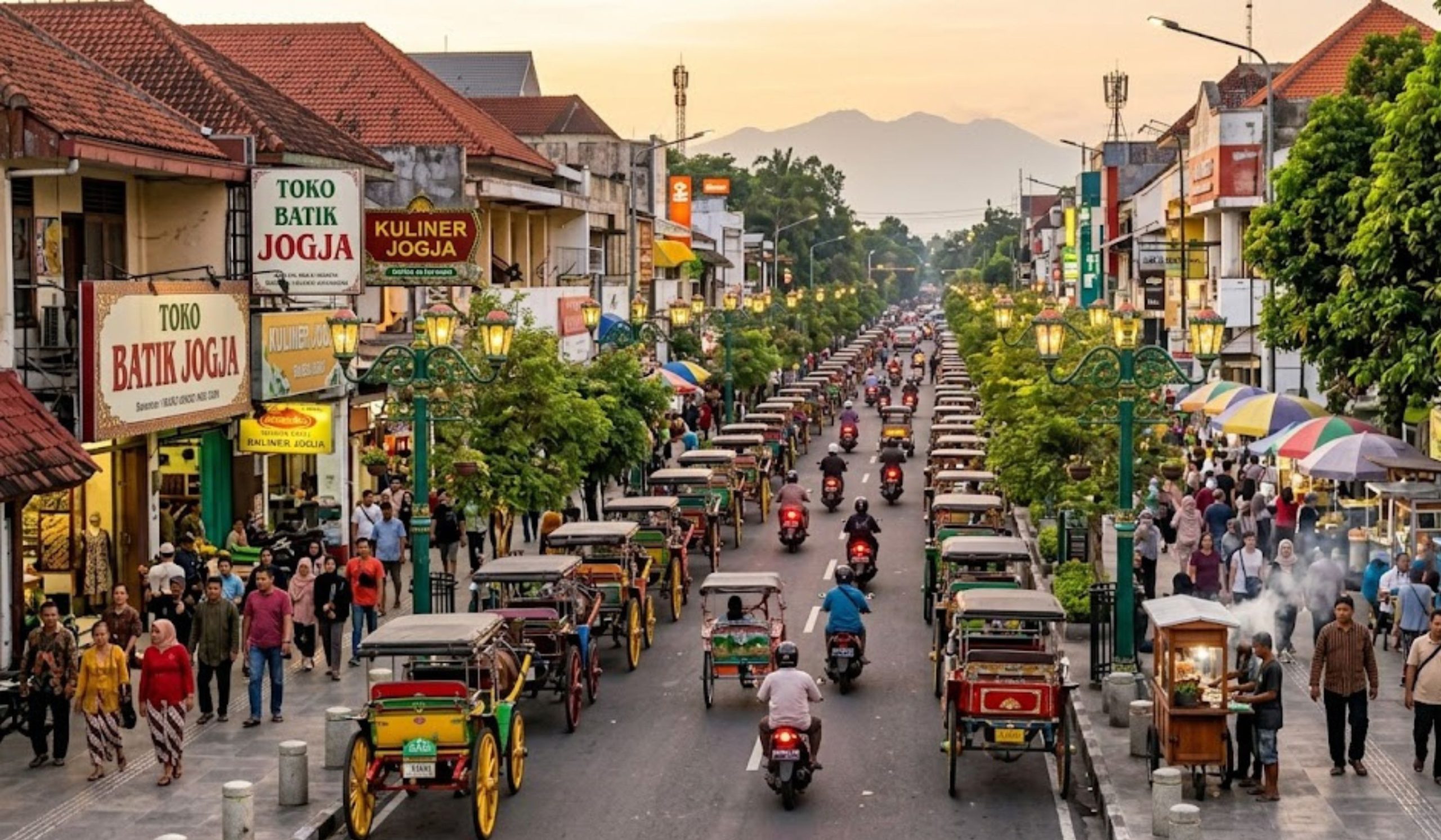

JAKARTA – Malioboro Jogja night tour experiences are becoming increasingly popular in 2026 as tourists continue filling Yogyakarta’s most iconic tourism district from sunset until midnight. Cultural performances, renovated pedestrian areas, shopping centers, and historic landmarks are driving a new wave of tourism activity across the Malioboro corridor.
The latest attraction drawing public attention is the “Malioboro Menari” cultural event held in front of Plaza Malioboro on April 24, 2026. The event combined dance performances, traditional costumes, and public participation in celebration of Kartini Day.
Tourists visiting Malioboro Jogja night tour destinations described the atmosphere as energetic and highly festive. The combination of local culture, modern urban facilities, and strong pedestrian accessibility continues strengthening Malioboro’s reputation as one of Indonesia’s top urban tourism destinations.
Malioboro Menari Turns Pedestrian Area Into Cultural Stage
The “Malioboro Menari” program was organized through collaboration between Plaza Malioboro, Maliabara Hotel, and local dance communities. Participants performed in traditional kebaya outfits inspired by Kartini Day celebrations, attracting large audiences throughout the evening.
One of the instructors, Sinta, said the event aimed to encourage self-confidence and cultural preservation among women and younger generations.
“We want people to enjoy positive activities together while appreciating Indonesian culture,” Sinta said during the event.
The performance area quickly became crowded with tourists recording videos and taking photographs. Many visitors remained in the area even after temporary pauses during prayer times, reflecting strong enthusiasm for cultural entertainment in public spaces.
Local tourism observers say events like Malioboro Menari are helping Yogyakarta maintain its image as Indonesia’s cultural capital while simultaneously attracting younger travelers who actively share tourism experiences online.
Beyond the event itself, tourists also explored Malioboro’s upgraded pedestrian facilities and surrounding heritage zones.
Traffic Management and Revitalization Improve Visitor Experience
Authorities have continued implementing major urban management policies around Malioboro to reduce traffic congestion and improve pedestrian mobility.
Since April 2026, the TKP Senopati parking facility no longer accepts tourism buses. Officials introduced the policy to support traffic reduction and strengthen Yogyakarta’s philosophical axis revitalization project.
Tourism buses are now redirected to alternative parking facilities in Ngabean and Abu Bakar Ali areas, while Jalan Mayor Suryotomo functions primarily as a one-way drop-off route for tourists entering Malioboro.
Travelers walking toward Malioboro pass several major city landmarks, including Melia Purosani Yogyakarta and the shopping district along Jalan Mataram, which is known for souvenir stores and handicraft businesses.
Tourism analysts believe the one-way traffic system and expanded pedestrian spaces are helping reduce overcrowding while creating a more comfortable atmosphere for visitors exploring the city on foot.
Meanwhile, free drinking water stations equipped with UV sterilization technology have also become one of Malioboro’s newest public service attractions.
Teras Malioboro and Historic Sites Remain Major Attractions
One of the busiest tourism centers during nighttime hours is Teras Malioboro 1, which now houses hundreds of relocated street vendors.
The facility, inaugurated in January 2022 by Sri Sultan Hamengkubuwono X, offers culinary products, souvenirs, clothing, and local crafts within a more organized environment.
Nearby, Pasar Beringharjo continues attracting tourists searching for traditional shopping experiences and local products.
Further south, visitors gather around Museum Benteng Vredeburg and the famous 0 Kilometer Point area, which remains one of Yogyakarta’s most photographed locations at night.
The Vredeburg fortress, originally constructed in the 18th century, now serves as a museum documenting Indonesia’s struggle for independence and later historical developments.
As Malioboro continues blending cultural heritage with modern urban tourism infrastructure, Yogyakarta’s most famous street is expected to remain among Indonesia’s busiest tourism destinations throughout 2026.