
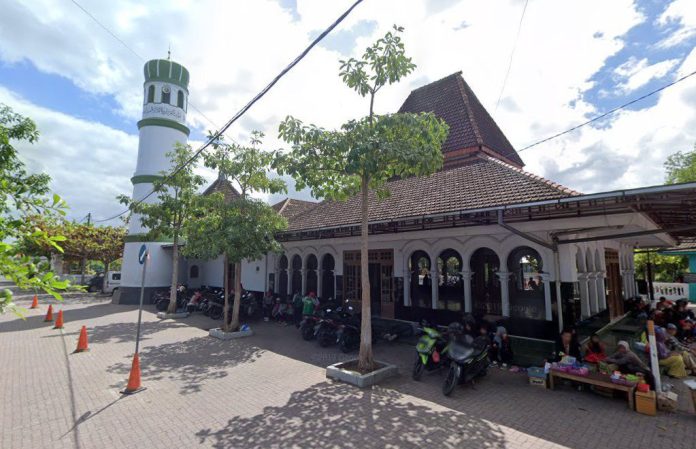

RADAR TULUNGAGUNG – The history of Islamic civilization in Tulungagung cannot be separated from the role of Tawangsari Village, an area that became the starting point of Islamic educational development in the region. Through religious learning, ancient mosques, and pesantren traditions, Tawangsari built one of the strongest foundations of Islamic civilization in southern East Java.
For centuries, the village has preserved its identity as a center of Islamic education. The influence of Tawangsari Islamic civilization continues to survive through generations, especially through old religious institutions that still stand today.
Located north of the city center of Tulungagung, Tawangsari once held the status of a “desa perdikan” or tax-free autonomous village during the Mataram era. Historical records in local oral traditions mention that the Mataram ruler granted the status to Kyai Abu Mansur after he helped Mangkubumi secure the throne of Mataram.
Tawangsari Became the Center of Islamic Education
The special status transformed Tawangsari into a strategic Islamic educational center in the Mancanegara Wetan region under Mataram authority. Since then, Islamic teachings developed rapidly through traditional learning systems centered around mosques and religious boarding schools.
One of the most important historical symbols in the village is Masjid Jami Tawangsari, an ancient mosque believed to have been built in the 18th century by Kyai Abu Mansur.
The mosque carries distinctive traditional Javanese architecture, featuring a tiered roof, wide veranda, and classic mosque design that reflects the blend between Javanese culture and Islamic values.
Around the mosque complex, visitors can still find several historical relics, including ancient gates, traditional structures, and burial sites of respected Islamic elders. The western area of the mosque is known as the resting place of Kyai Abu Mansur and several prominent figures who contributed to the spread of Islam in Tawangsari.
Ancient Mosque Became the Heart of Islamization
The role of Masjid Jami Tawangsari extended far beyond a place of worship. The mosque became the center of Islamization in Tulungagung through traditional educational systems commonly known as padepokan.
At that time, the padepokan functioned as a place where students learned Islamic teachings directly from religious leaders. Besides studying religion, many learners also trained in ethics, discipline, and traditional martial arts.
The educational model later evolved over time. Traditional padepokan gradually transformed into more structured institutions such as madrasah and pondok pesantren without abandoning their original identity as centers for Islamic character building.
Madrasah education introduced organized learning systems with class levels and semester examinations. Meanwhile, traditional pesantren methods survived through boarding systems that emphasized dedication, discipline, and direct interaction between students and teachers.
Islamic Tradition Still Lives Across Generations
Descendants of Kyai Abu Mansur continue preserving the Islamic educational traditions in Tawangsari. Oral stories passed down from generation to generation describe how students in the past came to the village not merely to study, but also to devote themselves to daily community service.
Unlike modern boarding systems where students pay tuition fees, earlier generations contributed through voluntary work while receiving religious guidance from Islamic scholars.
The spirit of devotion became one of the strongest values that shaped Tawangsari Islamic civilization. Students learned responsibility, independence, and humility alongside religious knowledge.
The village also developed into a social and cultural center where Islamic teachings blended harmoniously with local Javanese traditions. This cultural adaptation helped Islam grow peacefully and gain acceptance among surrounding communities.
Tawangsari Remains a Symbol of Islamic Civilization
Today, Tawangsari remains one of the important symbols of Islamic heritage in Tulungagung. The village continues preserving the legacy of Islamic education through pesantren, madrasah, and community religious activities.
Many residents still regard Tawangsari as a “kawah candradimuka” for seekers of Islamic knowledge. The village represents a long journey of Islamic civilization that began from simple traditional teachings and evolved into organized educational institutions.
The story of Tawangsari also highlights how education played a major role in accelerating the spread of Islam in Java. Through ancient mosques, pesantren traditions, and the dedication of religious leaders, the village successfully built a strong Islamic foundation that still influences society today.
As modernization continues to transform many aspects of life, Tawangsari stands as a reminder that the preservation of history, culture, and religious education remains essential for future generations.