
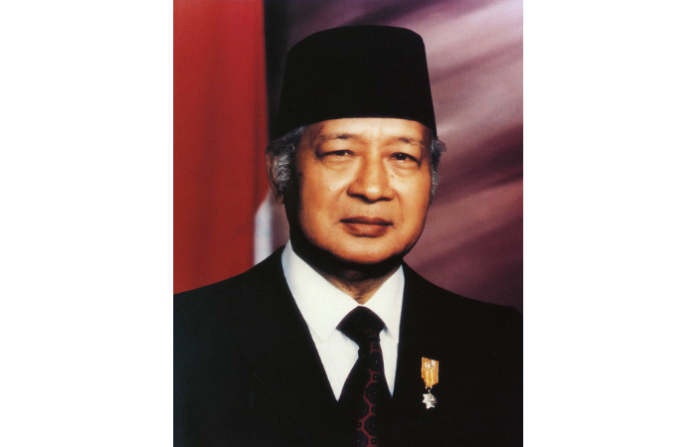

RADAR TULUNGAGUNG – The debate over whether Soeharto was a dictator remains one of the most controversial topics in Indonesian history. Even decades after his resignation, the legacy of Indonesia’s second president continues to spark discussions among historians, political analysts, and the public.
Soeharto, who ruled Indonesia for 32 years, is often described as a strong leader who brought stability and economic growth. However, critics argue that his leadership reflected authoritarian rule, marked by strict control over political opposition and limited democratic freedom. This ongoing debate places the “Soeharto dictator” narrative at the center of historical interpretation.
Born on June 8, 1921, in Yogyakarta, Soeharto came from a modest background. His early life was shaped by hardship, including being raised by foster caregivers for several years. Despite these challenges, he showed leadership qualities from a young age, which later influenced his decision to join the military, a choice that would ultimately change the course of Indonesian history.
Early Life and Military Rise
Soeharto was born on June 8, 1921, in Yogyakarta, into a modest family. His early life involved hardship, including separation from his parents at a young age. Despite these challenges, he developed discipline and leadership skills early on.
He chose a military career in 1939, a decision that changed his life and Indonesia’s future. During the struggle for independence, Soeharto proved his capability as a military leader. He gained recognition during key operations, including the General Offensive of March 1, 1949, in Yogyakarta.
His consistent performance helped him climb the ranks quickly. By the early 1960s, he had become one of the most influential figures in the Indonesian Army.
Economic Growth and Development Achievements
During his presidency, Soeharto focused heavily on economic development. Indonesia experienced significant growth, particularly in infrastructure, education, and healthcare. Inflation, which had previously reached extreme levels, was brought under control.
Foreign investment increased, exports grew, and poverty rates declined. At one point, the World Bank even referred to Indonesia as part of the “Asian Tiger” economies. These achievements contributed to Soeharto’s repeated re-election by the People’s Consultative Assembly, allowing him to serve multiple terms in office.
Supporters argue that these accomplishments demonstrate effective leadership, especially in stabilizing a country that had previously faced severe economic and political instability.
Authoritarian Rule and Human Rights Concerns
Despite these successes, Soeharto’s administration has been widely criticized for its authoritarian practices. The government maintained tight control over the press, political parties, and civil society. Media outlets that criticized the regime were often shut down, as seen in the banning of several major publications in the 1990s.
Numerous human rights violations were also reported during the New Order era. These include enforced disappearances, suppression of political activists, and violent incidents such as the Tanjung Priok tragedy, the Timor-Leste conflict, and the Trisakti shootings in 1998.
Corruption, collusion, and nepotism, commonly referred to as KKN, became deeply entrenched in the system. Critics argue that economic benefits were unevenly distributed, with wealth concentrated among elites connected to the regime, while many Indonesians remained in poverty.
The Fall of the Regime and Historical Legacy
The Asian financial crisis in 1997 marked the beginning of the end for Soeharto’s rule. The Indonesian rupiah collapsed, inflation soared, and many businesses faced bankruptcy. Public dissatisfaction grew rapidly, leading to massive protests led by students and activists demanding reform.
The situation escalated following the Trisakti tragedy, where four students were killed during a demonstration. This event intensified nationwide unrest and ultimately forced Soeharto to resign on May 21, 1998.
His resignation ended over three decades of leadership and marked the beginning of the Reformasi era in Indonesia.
A Legacy Still Debated
Today, the question of whether Soeharto was a dictator remains open to interpretation. Some view him as a national hero who stabilized and developed Indonesia, while others see him as an authoritarian ruler responsible for human rights abuses and systemic corruption.
This dual perspective highlights the complexity of Indonesia’s history. As new generations revisit the past, the Soeharto era continues to serve as a critical lesson on leadership, power, and democracy.