
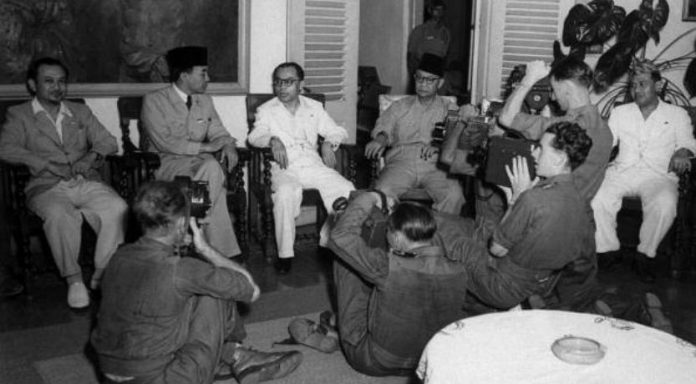

RADAR TULUNGAGUNG – Rengasdengklok Incident stands as a crucial turning point in the story of the Indonesia Independence Proclamation. This dramatic moment shows how young nationalists pushed Sukarno and Mohammad Hatta to act quickly after Japan’s surrender in World War II.
The Rengasdengklok Incident began amid growing uncertainty in August 1945. Japan had occupied Indonesia since 1942 and once promised independence. However, the situation changed after Japan suffered major defeats in the Pacific War. The atomic bombings of Hiroshima and Nagasaki forced Japan to surrender on August 14, 1945.
News of Japan’s surrender reached Indonesia quickly. Young activists saw a rare opportunity. They believed the Indonesia Independence Proclamation must happen immediately. They refused to rely on Japanese approval or political bodies linked to Japan.
Youth Pressure Sparks Conflict
On the night of August 15, 1945, youth leaders held a meeting in Jakarta. They agreed that Sukarno and Hatta must declare independence on August 16. Representatives visited both leaders at their home on Jalan Pegangsaan Timur.
The youth urged immediate action. They warned that delay could trigger unrest. However, Sukarno rejected the proposal. He insisted on discussing independence through the Preparatory Committee for Indonesian Independence. He wanted to avoid chaos and ensure political stability.
This disagreement created tension between the youth and senior leaders. The younger group feared Japan could still influence the decision. They wanted a clean break from any foreign control.
The Rengasdengklok Incident Unfolds
After failing to persuade Sukarno and Hatta, the youth took a bold step. In the early hours of August 16, they moved both leaders to Rengasdengklok. This area was far from central Jakarta and had strong support from Indonesian troops.
The youth chose Rengasdengklok because of its strategic location. It offered safety from Japanese interference. Local forces from PETA helped secure the area and protect the leaders.
Sukarno traveled with his family, including Fatmawati and their young son. At first, they stayed in a simple hut. Later, they moved to a safer house owned by a local resident. During their stay, the youth continued to push Sukarno to declare independence without delay.
Negotiation Brings Agreement
While events unfolded in Rengasdengklok, negotiations took place in Jakarta. Senior nationalist Ahmad Subardjo met youth representatives to find a solution. Both sides shared the same goal but differed on strategy.
Ahmad Subardjo offered a guarantee. He promised that the Indonesia Independence Proclamation would take place on August 17, 1945. He even risked his life to convince the youth.
This assurance worked. The youth agreed to release Sukarno and Hatta. Both leaders returned to Jakarta later that day.
Drafting the Proclamation Text
After returning, Sukarno and Hatta went to the residence of Admiral Maeda. The location provided a safe space for discussion. There, they began drafting the proclamation text.
Sukarno wrote the draft based on ideas from Hatta and Ahmad Subardjo. The wording remained simple but powerful. Sayuti Melik later typed the final version of the document.
A debate followed about the signature. Some participants wanted all attendees to sign. However, youth leader Sukarni proposed a different idea. He suggested that only Sukarno and Hatta sign the document.
This proposal gained support. Both leaders signed the proclamation on behalf of the Indonesian people.
August 17, 1945: Independence Declared
On the morning of August 17, 1945, Sukarno read the Indonesia Independence Proclamation. The event took place at his residence in Jakarta. Organizers chose this location to avoid conflict with Japanese troops.
The ceremony was simple but meaningful. After the reading, participants raised the red and white flag. Fatmawati had sewn the flag by hand. The crowd responded with strong emotion and pride.
A Defining Moment in History
The Rengasdengklok Incident shows the courage and urgency of Indonesia’s youth. Their actions forced a faster decision at a critical moment. Without their pressure, the Indonesia Independence Proclamation might have faced delay.
This event highlights the power of unity across generations. It also proves that decisive action can shape history. Indonesia’s independence did not come easily. It required courage, risk, and strong determination from its people.