

RADAR TULUNGAGUNG – G30S PKI tragedy remains one of the darkest chapters in Indonesia’s history, marked by violence, political tension, and the loss of key military figures. This September 30 Movement Indonesia event not only shocked the nation but also reshaped its political direction for decades to come.
In the early hours of October 1, 1965, a coordinated operation targeted high-ranking officers of the Indonesian Army. The movement, widely associated with the Indonesian Communist Party (PKI), aimed to eliminate military leaders who opposed communist influence. As a result, seven officers became victims in a brutal series of kidnappings and killings.
The G30S PKI incident began with carefully planned operations led by figures linked to the PKI. Troops and sympathizers were mobilized, divided into several units, and assigned specific targets. Their mission was clear: abduct and neutralize top army generals accused of being part of a so-called “Council of Generals” allegedly plotting against President Sukarno.
Targeted Attacks on Military Leaders
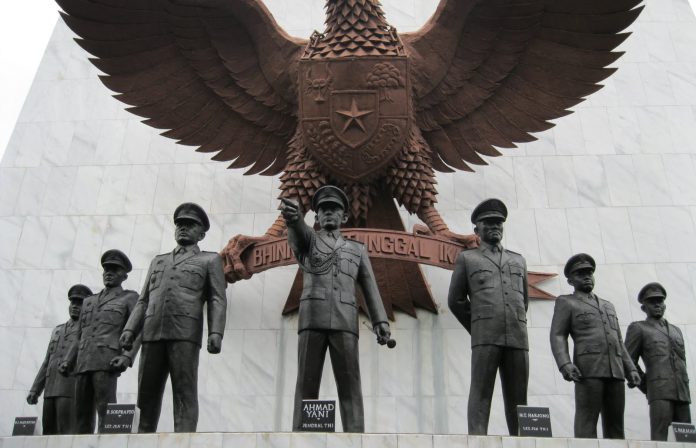
The operation unfolded simultaneously across multiple locations in Jakarta. Lieutenant General Ahmad Yani was among the first victims. At his residence, armed men arrived before dawn, claiming he was summoned by the president. When Yani resisted, he was shot on the spot. His body was then taken away by the attackers.
Similar events occurred at the homes of other generals. Major General R. Suprapto was forcibly taken after being told to report to the palace. Meanwhile, Major General M.T. Haryono was shot inside his home after attempting to resist the intruders. The attackers showed no hesitation, using violence to ensure their mission succeeded.
Brigadier General D.I. Panjaitan also faced a tragic fate. After refusing to comply immediately, he was shot in his yard. The attackers continued their mission with precision, targeting Major General S. Parman and Brigadier General Sutoyo Siswomiharjo, who were abducted under similar pretexts.
Aide Mistaken as Target
One of the most tragic moments involved First Lieutenant Pierre Andreas Tendean. He was not an intended target but was mistaken for General Abdul Haris Nasution. In a brave attempt to protect his superior, Tendean identified himself as Nasution and was subsequently captured. Meanwhile, Nasution managed to escape by jumping over a wall, becoming the only targeted general who survived.
The violence extended beyond military figures. Nasution’s young daughter, Ade Irma Suryani, was fatally wounded during the attack, highlighting the indiscriminate nature of the operation.
Lubang Buaya: Final Execution Site
After the kidnappings, the victims were transported to Lubang Buaya, a remote area on the outskirts of Jakarta. There, the captured officers endured torture before being executed. Their bodies were thrown into a deep, abandoned well in an attempt to conceal the crime.
The perpetrators also seized key communication centers, including the national radio station (RRI), to broadcast their narrative. They claimed the movement was an effort to protect the country from a military coup. However, this justification quickly faced resistance.
Military Response and Aftermath
By the evening of October 1, the Indonesian Army launched a counter-operation led by Major General Suharto. Strategic locations, including RRI and telecommunications centers, were reclaimed. Within days, the military regained control, effectively suppressing the G30S PKI movement.
On October 3, the Lubang Buaya site was discovered. The bodies of the seven officers were recovered the following day. They were later buried with full honors at the Kalibata Heroes Cemetery and officially recognized as National Heroes.
The aftermath of the September 30 Movement Indonesia led to widespread political changes. The PKI was dismantled, and its leaders were captured or killed. The event also strengthened the military’s influence in Indonesian politics.
Remembering a Dark History
Today, the G30S PKI tragedy serves as a reminder of the dangers of political conflict and ideological extremism. The events of 1965 continue to be commemorated annually, with October 1 recognized as Pancasila Sanctity Day.
This historical episode underscores the importance of unity and vigilance in preserving national stability. While the full truth behind the event remains debated, its impact on Indonesia is undeniable.