
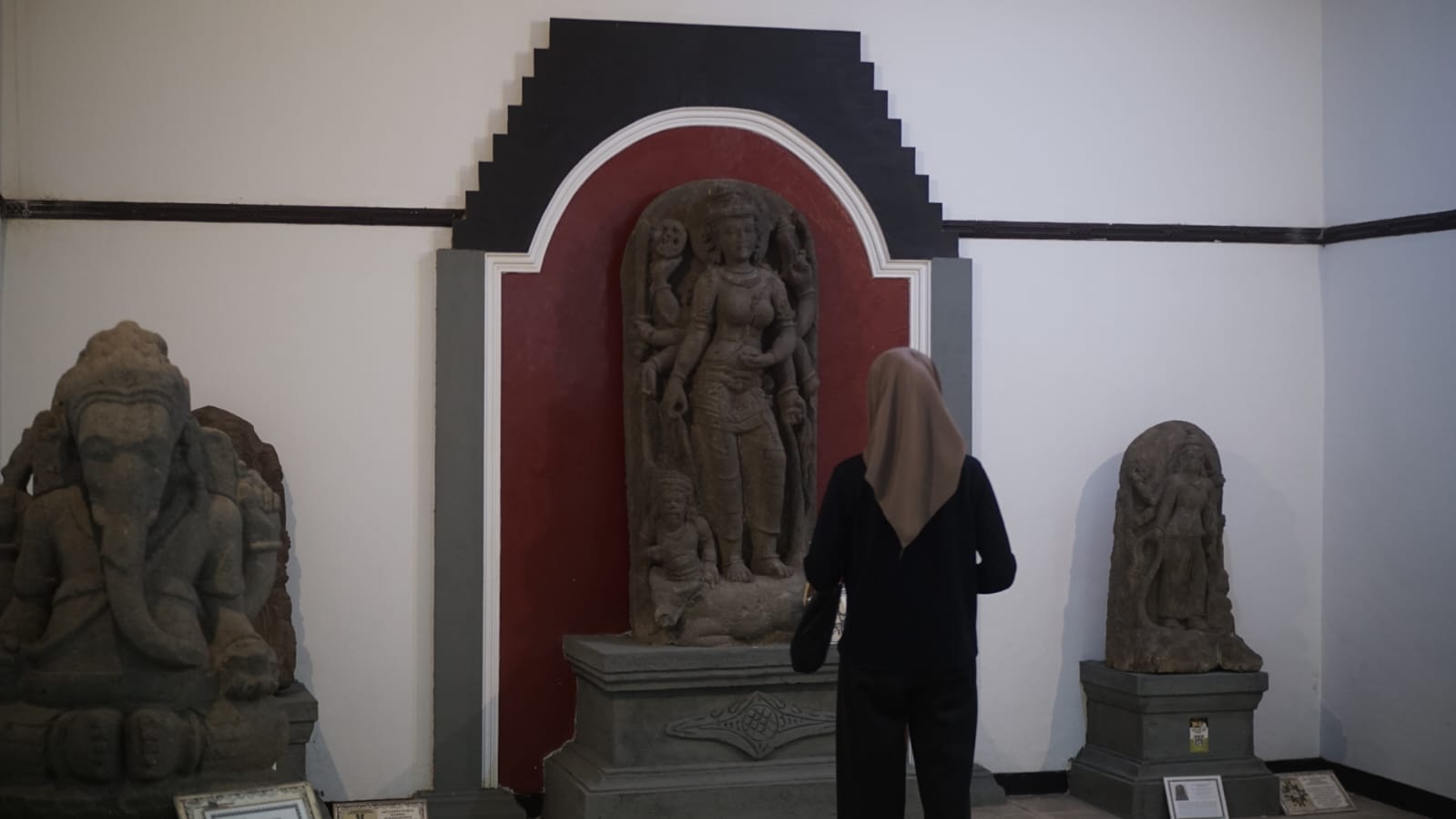

BLITAR – The Penataran Museum in Blitar Regency offers visitors a unique journey through the history of East Java’s ancient civilization. Located in the village of Penataran in Nglegok district, the museum has become a fascinating destination.
Moreover, the museum sits close to the famous Penataran Temple, known as the largest Hindu temple complex in East Java. Because of this proximity, the site creates a powerful historical corridor that connects artifacts with the architectural legacy of the region.
Built in the 1990s, the Penataran Museum serves as a protection center for hundreds of historical artifacts. Inside the modest building, visitors can find statues, inscriptions, temple stones, and various archaeological remains.
These objects reveal important stories about the cultural and spiritual life of ancient Javanese society. At the same time, they show how religion, art, and governance shaped life in earlier centuries.
One of the museum’s most remarkable collections is the statue of Durga Mahisasuramardini, which portrays the goddess Durga defeating the demon Mahishasura. The statue highlights the strength and divine authority associated with the goddess in Hindu mythology.
In addition, the intricate carvings demonstrate the extraordinary craftsmanship of artists during the golden era of the Majapahit Kingdom. The fine details reflect the advanced artistic tradition that flourished in Java centuries ago.
Besides the Durga statue, the museum also houses statues of Ganesha, fragments of Lingga-Yoni, and several relief pieces. Many of these artifacts reflect the artistic style associated with the Singhasari Kingdom.
Each carving carries more than aesthetic value. In fact, many of them contain philosophical meanings and spiritual symbolism that reveal how ancient communities understood life, divinity, and nature.
Visitors often feel amazed by how these artifacts bring the past to life. For many people, the museum feels like stepping into a “time corridor” that connects modern society with centuries of history.
“Although the building is simple, the collections help us imagine how people lived in the past,” said Meilia Wulandari, one of the visitors. “It feels like learning history directly from the original objects.”
Today, the Penataran Museum continues to attract travelers, students, and researchers interested in Javanese heritage. Furthermore, its strategic location makes it easily accessible from several points in Blitar.
The museum lies about 13.5 kilometers from Patria Bus Terminal, 11.1 kilometers from Blitar Railway Station, and roughly 10.7 kilometers from Blitar City Square.
As interest in cultural tourism grows, places like Penataran Museum play a crucial role in preserving historical memory. More importantly, they help younger generations understand the depth of Indonesia’s rich civilization.