
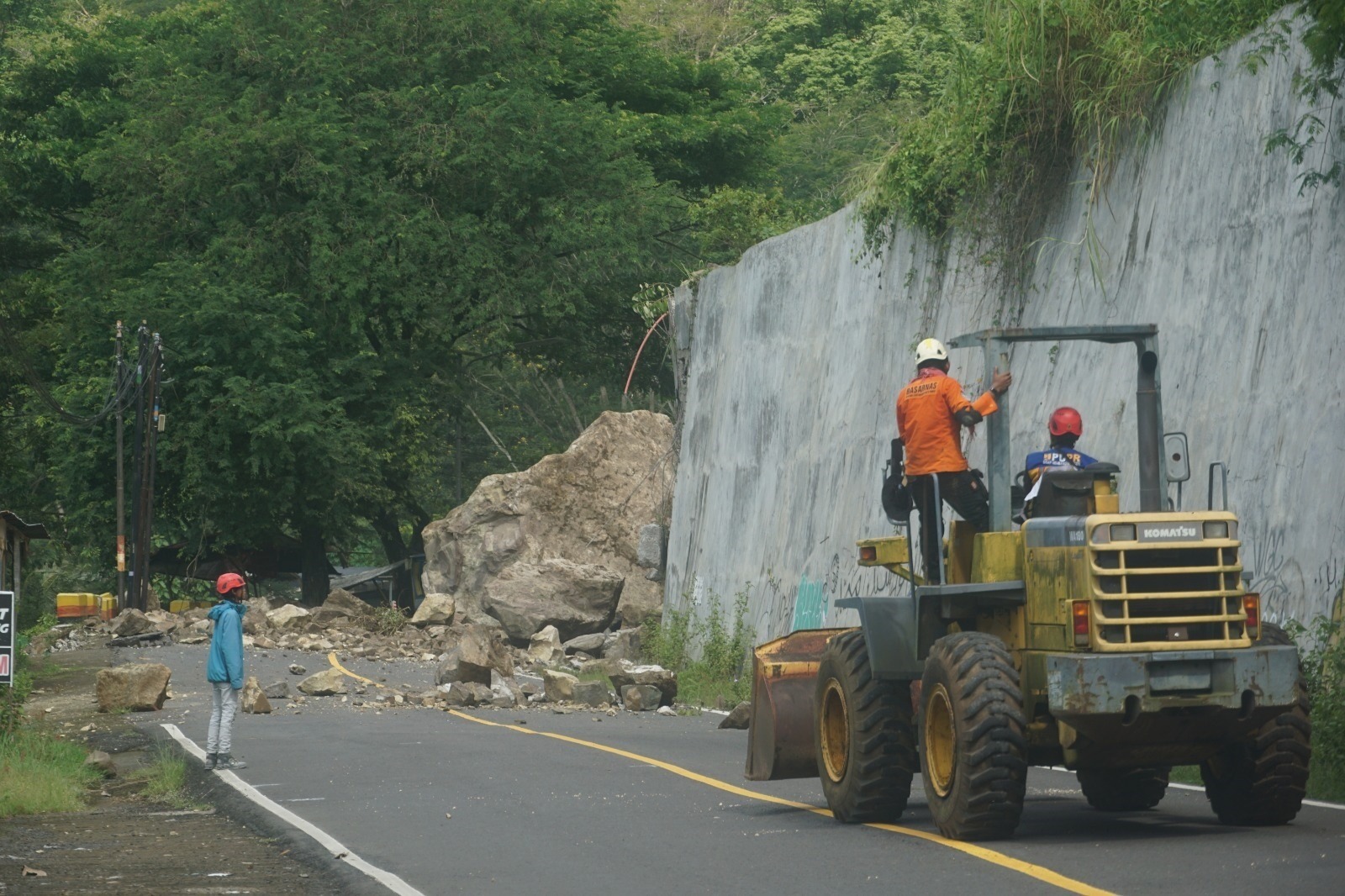

TRENGGALEK – A landslide on the Trenggalek-Ponorogo National Road has forced authorities to close the route entirely at KM 16, disrupting traffic on Tuesday evening. Thick debris buried the roadway around 5:30 p.m. local time, making it unsafe for vehicles to pass.
Officials estimate the closure will remain in effect at least through the night. Emergency teams are assessing the site before launching a full-scale cleanup operation.
St Triadi Atmono, Head of the Regional Disaster Management Agency (BPBD) of Trenggalek Regency, confirmed the total shutdown. “A landslide covered the entire road surface at KM 16 on the Trenggalek–Ponorogo national route. We closed the road temporarily because the debris is thick and poses serious risks,” he said.
BPBD officers, working alongside military and police personnel, installed water barriers to prevent motorists from entering the affected zone. Authorities prioritized safety as unstable soil conditions continue to threaten the area.
Triadi said crews are still waiting for heavy machinery to arrive before clearing operations can begin. Meanwhile, field officers are mapping the cliff structure above the road to assess the risk of further landslides.
“We plan to start clearing the material in the morning, depending on field conditions. Our team is conducting mapping because the slope remains prone to additional slides,” he explained.
Officials have not announced a reopening timeline. According to BPBD, safety considerations will determine the pace of response efforts. If the hillside shows signs of instability, crews will proceed gradually.
The Trenggalek-Ponorogo National Road serves as a vital connection between the two regencies. Its closure has forced drivers to seek alternative mountain routes.
Authorities urge motorists to remain vigilant and avoid the area until further notice. “We ask the public to be patient and stay cautious. Safety is our top priority in handling this disaster,” Triadi said.
Local disaster officials continue to monitor weather conditions, as heavy rainfall often increases the risk of landslides in the region’s mountainous terrain.