
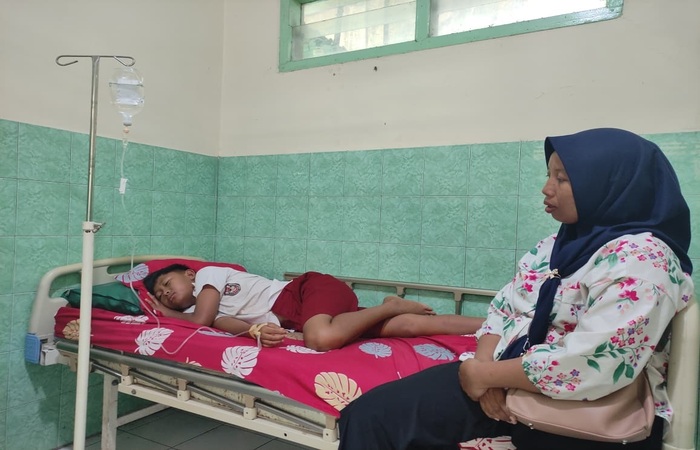

RADAR TULUNGAGUNG – The Tulungagung school food poisoning case has forced authorities to suspend operations at a government-backed meal kitchen in Karangrejo District, East Java.
At least 24 students from SDN 3 Bungur required medical treatment after reportedly consuming meals distributed under the MBG nutrition program. Health officials treated the students at the Karangrejo Community Health Center.
Following the incident, Indonesia’s National Nutrition Agency (BGN) ordered a temporary shutdown of SPPG Bungur 004, the kitchen responsible for preparing the meals.
Authorities will keep the facility closed until inspectors complete a full evaluation.
According to Sebrina Mahardika, BGN’s regional coordinator in Tulungagung, the kitchen had operated for less than two months. However, it had not yet obtained the required Hygiene and Sanitation Feasibility Certificate (SLHS).
“The operator has applied for the SLHS through the Online Single Submission system,” Sebrina explained. “The Health Office had planned to conduct an Environmental Health Inspection. However, due to this incident, we will also carry out a sanitation and management evaluation.”
Preliminary findings revealed several concerns. Inspectors identified issues related to raw material storage, kitchen cleanliness, and overall hygiene practices.
Moreover, the kitchen’s location raised red flags. The facility stands near a goat pen, which violates sanitation requirements.
“A food production site should not be located near pollution sources such as livestock pens or waste disposal areas,” Sebrina said.
Investigators are also reviewing the meal served on the day of the incident. The menu included white rice, shredded chicken, tofu, stir-fried long beans, and dates.
Notably, BGN has previously warned providers against distributing certain dishes under the MBG program. Shredded chicken ranks among the items flagged for higher spoilage risk if handled improperly.
“Shredded chicken is not recommended,” Sebrina stressed. “It can lose nutritional quality and spoil more quickly if not managed carefully.”
Other restricted menu items include fried rice, yellow rice, coconut rice, soto, vermicelli noodles, capcay, and bean sprouts.
As a result, investigators will assess whether food handling procedures contributed to the suspected poisoning.
Authorities have secured food samples for laboratory analysis. The tests aim to determine the exact cause of the suspected contamination.
Meanwhile, officials continue monitoring the affected students’ recovery. Medical teams have not reported severe complications so far.
However, the case has intensified scrutiny of food safety standards within Indonesia’s school meal initiatives.
The Tulungagung school food poisoning incident has sparked broader concerns about compliance and oversight. Although the MBG program seeks to improve student nutrition, experts warn that strict hygiene enforcement remains critical.
BGN has pledged to strengthen supervision and accelerate inspections for newly operating kitchens. Furthermore, officials plan to review management procedures at similar facilities.
For now, SPPG Bungur 004 will remain closed pending evaluation results. Authorities insist that student safety remains their top priority.
Ultimately, the Tulungagung school food poisoning case serves as a reminder that nutrition programs must uphold rigorous sanitation standards, especially when serving children.