
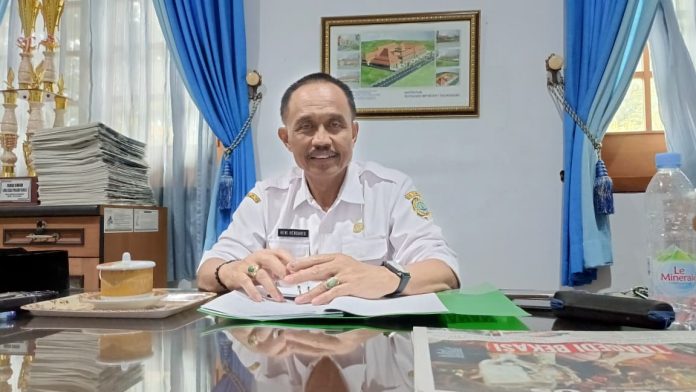

TULUNGAGUNG – Efforts to curb student traffic accidents in Tulungagung are gaining momentum as junior high school leaders strengthen coordination with police and enforce stricter rules on student mobility.
The Association of State Junior High School Principals (MKKS) in Tulungagung has introduced firm measures to reduce risks on the road. One key policy bans students from bringing motorcycles to school, reflecting concerns over rising accident rates among underage riders.
MKKS Chair Heni Hendarto said most junior high school students are under 17 and therefore not legally allowed to drive.
“We ensure that no student motorcycles are parked inside public school areas. All students use bicycles. If anyone insists on bringing a motorcycle, they park outside, which is beyond our authority as educators,” he said on April 29.
Schools now encourage students to cycle or use pick-up transportation instead of riding motorbikes. Educators believe this step reduces exposure to road hazards while reinforcing discipline among students.
Heni stressed that schools cannot tackle student traffic accidents alone. He called for stronger involvement from law enforcement to deliver consistent and practical road safety education.
“Students today have high mobility. Many already travel independently. That is why repeated education on safety and traffic rules is crucial,” he said.
To address this, schools have intensified collaboration with Tulungagung Police. Traffic officers regularly visit campuses to lead ceremonies and conduct classroom sessions focused on road safety awareness.
During these sessions, officers go beyond theory. They explain real-life risks on the road, highlight the importance of wearing helmets, and outline legal consequences for violations. This hands-on approach helps students better understand the dangers they face.
“Education cannot be a one-off effort. Its impact fades quickly. We push for regular sessions so students not only understand the rules but also build discipline on the road,” Heni added.
The program also extends beyond urban areas. MKKS works with local police stations to ensure schools in suburban and rural areas receive the same level of education. This is crucial for students who travel longer distances and face higher risks.
Authorities view student traffic accidents as a serious issue driven by limited driving experience, peer influence, and lifestyle factors. Without proper guidance, many students underestimate road safety risks.
Heni said collaboration between schools and police plays a key role in shaping safer behavior. Schools focus on discipline and character building, while police provide legal context and real-world insights.
“This is not about punishment, but about habit. Students must see safety as a necessity, not just a rule,” she said.