
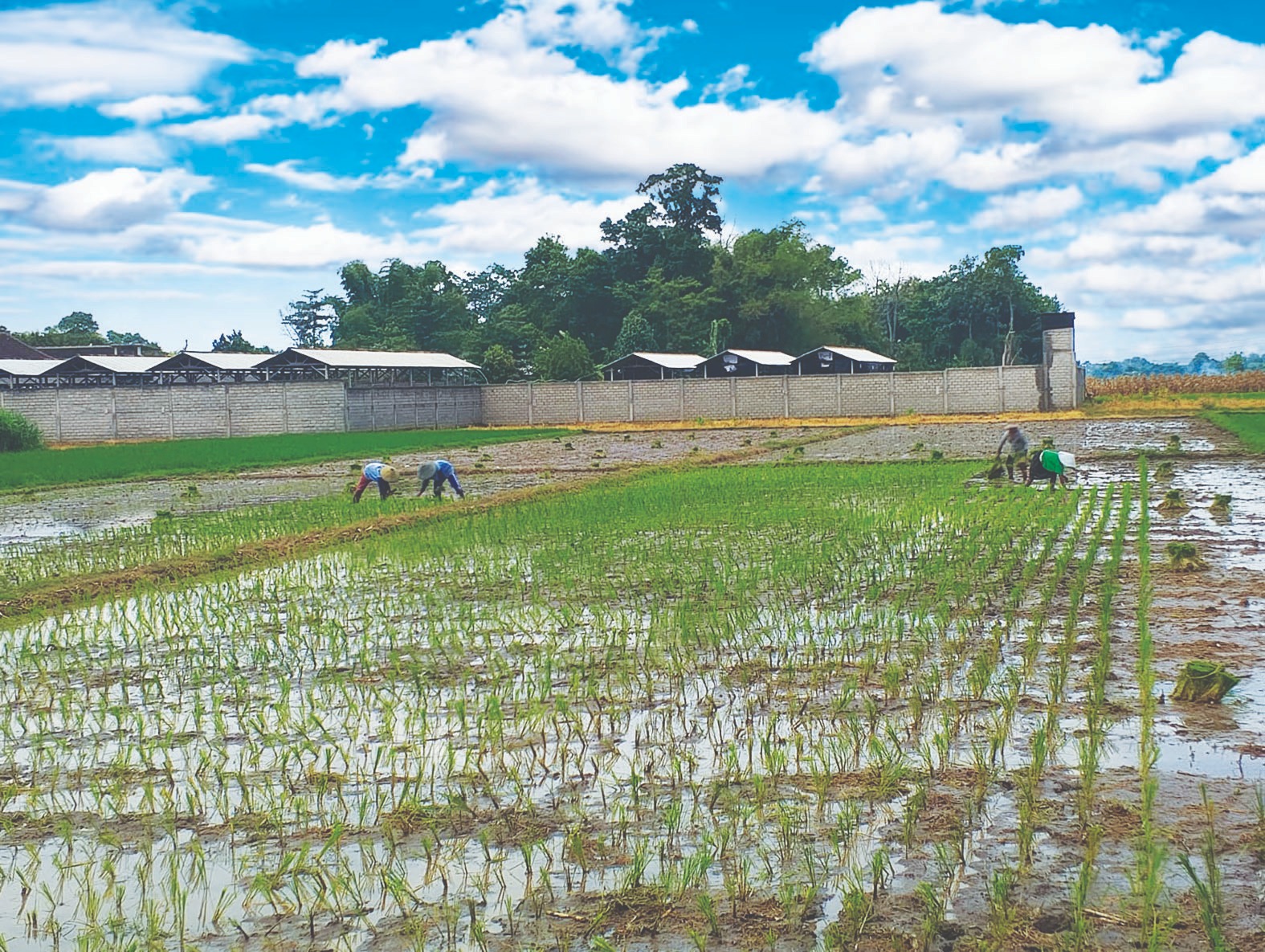

BLITAR – Rice farming insurance in Blitar Regency continues to move slowly as local authorities work through administrative barriers that still affect farmer participation.
Officials say the biggest obstacle remains the registration process. Field officers must collect and verify data from farmers before sending it for approval.
Nando Gumelang Aldiansyah, a policy analyst at the regional food security and agriculture office, said accurate farmer data remains essential for the program. Premium assistance can not move forward without complete records.
The verification stage often takes time because officers must match farmer identities, land ownership details, and planting information. One incomplete document can delay the next stage.
“The registration of prospective farmers and land plots often becomes a field obstacle. Last year no insurance funds were disbursed. Even though registration opened during the last planting season, the process required very precise data,” he said.
He explained that incomplete submissions from one area often slow the process in other areas as well. That situation affects the release of premium support from higher levels of government. As a result, some farmers still wait even after finishing registration.
Local officials also face another challenge. The regional government still has no specific regulation that fully supports the insurance scheme. At the moment, authorities only provide limited help for the remaining premium paid by farmers.
“There is an effort to help cover the remaining premium, but until now we still do not have a specific local regulation that formally manages it,” Nando added.
Officials say the lack of a firm local regulation affects continuity between planting seasons and often makes implementation less stable when budget priorities shift.
Even though farmers only pay Rp 36,000 per hectare under the current scheme, participation remains low. The central government already covers Rp 144,000 of the total Rp 180,000 premium, yet many farmers still have not joined the program.
Dhanis Fardianto, head of agricultural infrastructure at the local agriculture office, said his team continues outreach through district agricultural officers so farmers can better understand the registration process and the benefits of crop insurance.
“We have carried out outreach through agricultural officers so they can pass the information directly to farmers. We hope these administrative barriers can be resolved soon,” he said.
He added that 867 registered farmers this year could receive protection if crop failure occurs.
Officials now hope clearer procedures will help the insurance program run better across Indonesia.