
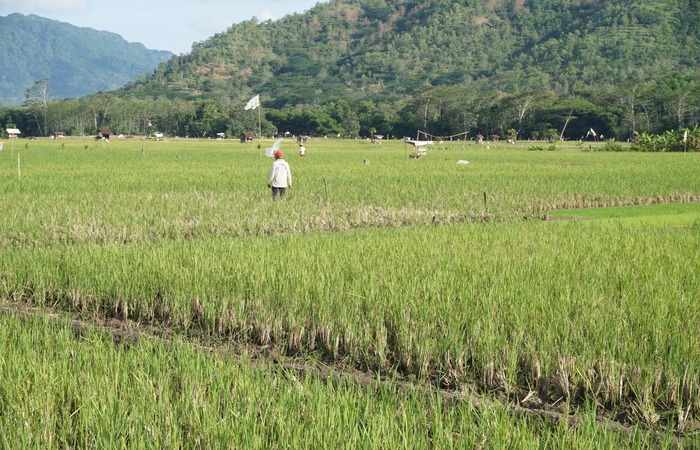

RADAR TRENGGALEK – The LP2B land conversion Trenggalek policy allows protected agricultural land to change use only with approval from Indonesia’s agriculture ministry. Local authorities say the rule applies to land planned for the Village/Kelurahan Merah Putih Cooperative (KDKMP) development program.
Trenggalek Agriculture and Food Office confirmed that any conversion of sustainable food farmland (LP2B) must follow national regulations and strict procedures. Head of the office Imam Nurhadi said LP2B may be converted when projects serve public interest or qualify as national strategic programs.
Imam explained that landowners or project planners cannot directly convert LP2B status. Instead, the local agriculture office facilitates proposals and submits them to Indonesia’s Ministry of Agriculture for approval.
The ministry’s permit becomes the legal basis for the regent to release LP2B land for development. Without that central authorization, local governments cannot alter protected farmland status.
Authorities identified dozens of LP2B plots in Trenggalek that may be affected by the cooperative program. Officials are still verifying the exact number and locations.
“The latest figure I know is around 21 or 22 LP2B sites,” Imam said. He added that the office continues to review data to confirm the final count.
Regulations require any party converting LP2B land to provide replacement farmland at least three times larger than the original area. The rule aims to maintain overall agricultural capacity and food security.
Replacement land must also match the original land’s quality and classification. If the converted plot has technical irrigation, the substitute land must offer similar irrigation infrastructure.
Applicants must submit a technical feasibility study explaining why LP2B land is necessary for the project. They must also identify and prepare the replacement farmland before submitting the proposal.
Imam said proposals must clearly state the location of substitute land. Authorities review these documents before forwarding them to the agriculture ministry.
He stressed that the structured process ensures development can proceed without reducing Trenggalek’s total sustainable farmland area. The policy also safeguards irrigation standards and long-term agricultural productivity.