
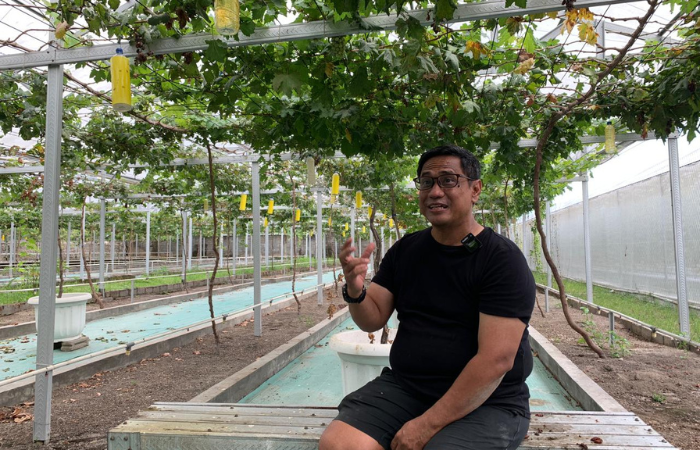

BLITAR – Hydroponic grape farming in Blitar has transformed Muhammad Ikram from a struggling egg producer during the pandemic into a successful premium grape grower and agrotourism pioneer. His greenhouse vineyard in Ngadirejo, Kepanjenkidul district now yields up to 600 kilograms per harvest and attracts visitors for pick-your-own experiences.
Ikram began cultivating grapes in 2020 after Covid-19 restrictions disrupted his poultry supply business. As distribution stalled and operations halted, he searched for a new livelihood. Eventually, he turned to agriculture and chose grapes, inspired by his father’s past experience.
Despite having no formal agricultural training, Ikram built two greenhouses measuring 11 by 50 meters each. At first, he set no production targets and focused only on learning the process. Over time, the hydroponic vines adapted well and produced a strong first harvest that surprised him.
The 52-year-old farmer said social media exposure later drove crowds to his vineyard. Visitors came not only to buy fruit but also to pick grapes directly from the plants. Consequently, the farm evolved into seasonal agrotourism alongside fruit sales.
Ikram specializes in premium imported varieties such as Shine Muscat, Dixon, Jupiter, and Transfiguration. He sources seedlings through overseas channels or trusted intermediaries. Because premium grapes target middle- and upper-income consumers, he markets them to supermarkets and modern retail outlets.
However, grape cultivation demands precision and discipline. Ikram learned through practice, online videos, and advice from fellow growers that grapes are highly sensitive to weather and nutrient balance. Therefore, strict fertilization schedules and greenhouse controls are essential to avoid crop failure.
Following his success, local agriculture offices and educational institutions began visiting the vineyard. Students and university groups now use the site to study hydroponic fruit farming. Moreover, Ikram actively encourages young visitors to consider agriculture as a viable business.
Today, his “Gus Anggur” vineyard operates five greenhouses and sells fruit both online and on-site. During harvest periods, he opens grape-picking tourism that attracts visitors from across Java and beyond. As a result, the venture generates income while promoting agricultural literacy.
Ikram hopes premium fruit farming can reduce dependence on imports and inspire a new generation of farmers in Blitar. He believes local growers could eventually meet part of regional fruit demand. Even modest self-sufficiency, he said, would strengthen Indonesia’s agricultural resilience.