
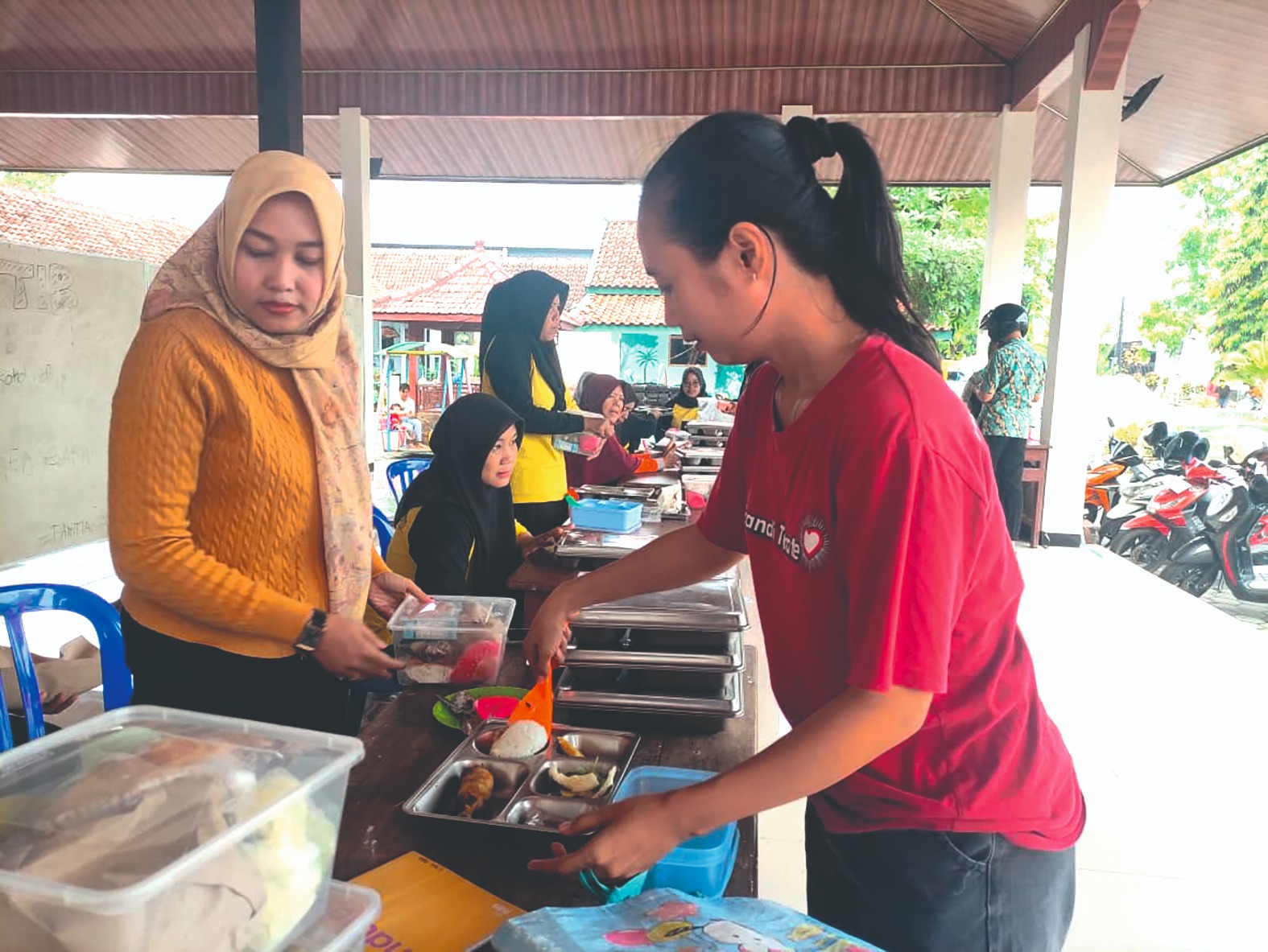

TULUNGAGUNG – The Free Nutritious Meal Program in Tulungagung has introduced a new transparency rule after public complaints over budget allocation and menu quality earlier this year. Authorities now require each Nutrition Fulfillment Service Unit (SPPG) to list itemized prices for every menu included in student meal packages.
The policy follows criticism surrounding the government’s Makan Bergizi Gratis (MBG) initiative, which provides free meals to students. Some parents questioned whether the Rp 15,000 (around $1) per portion budget fully covered food ingredients.
Sebrina Mahardika, Regional Coordinator of the National Nutrition Agency (BGN) in Tulungagung, said the misunderstanding stemmed from limited public information. “People assume the entire Rp 15,000 goes to food ingredients. In reality, only Rp 10,000 is allocated for large-portion raw materials and Rp 8,000 for small portions. The rest covers operational costs and incentives,” she explained.
According to Sebrina, a large portion costs Rp 15,000 in total. Of that amount, Rp 10,000 funds food ingredients. Meanwhile, Rp 2,000 covers rental incentives for utensils, cooking equipment, buildings, and land. The remaining Rp 3,000 supports operational expenses, including volunteer honorariums, distribution logistics, employment insurance, electricity, and water.
For smaller portions, the total budget stands at Rp 13,000. Authorities allocate Rp 8,000 for raw ingredients, while the remaining funds support similar operational components.
To address the controversy, BGN now obliges all SPPG units to provide detailed price breakdowns and nutritional information for each menu item. Officials share this data through internal communication groups that include beneficiary representatives, local health offices, and sub-district leadership forums.
Through this system, schools can forward the information to parents. “We deliver the data directly to beneficiaries and relevant agencies. School representatives can then share it with parents, ensuring tiered and transparent communication,” Sebrina said.
In addition to pricing transparency, BGN has tightened quality control measures. Authorities require suppliers to source ingredients from certified local micro, small, and medium enterprises (MSMEs). Vendors must also hold halal certification and official food safety permits, such as PIRT or BPOM approval.
Each product must display a production date and expiration label. Officials believe these measures will strengthen public trust and reduce negative assumptions about the program’s implementation.
BGN will continue to evaluate the Free Nutritious Meal Program in Tulungagung as it progresses. The agency is paying particular attention to adjustments during Ramadan, when logistical and technical challenges often arise.
By enforcing clearer accountability standards, authorities hope the program can maintain credibility while ensuring students receive balanced and safe meals.