
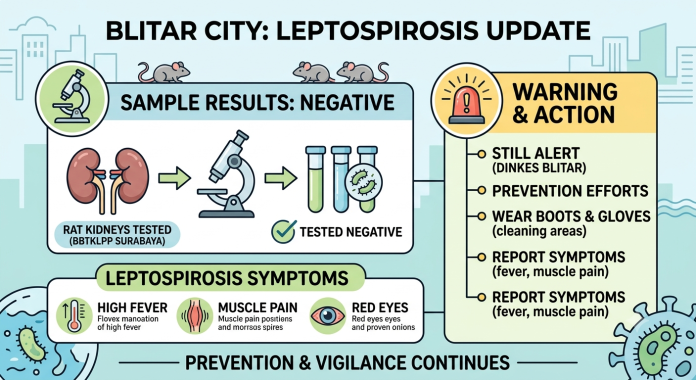

BLITAR – Leptospirosis remains a public health concern in Blitar City, East Java, even after laboratory tests found no traces of the disease-causing bacteria in two rat samples collected near the home of a confirmed patient.
Health authorities said the negative results offer encouraging news. However, officials continue to urge residents to stay vigilant because environmental exposure can still spread the infection.
Silvia Dewi Kusumawati, Head of Disease Prevention and Control at the Blitar City Health Office, said the testing followed the discovery of a positive leptospirosis case in the city.
Health workers captured rats from areas surrounding the patient’s residence and collected kidney samples for laboratory analysis. Officials then sent the samples to the Surabaya Center for Environmental Health Engineering and Disease Control for examination.
“We have received the laboratory results. The two rat kidney samples tested negative for Leptospira bacteria,” Silvia said on Monday.
According to Silvia, the findings indicate that the tested rodents did not carry the bacteria responsible for leptospirosis. Even so, health officials stress that the results do not eliminate the possibility of transmission in other locations.
Leptospirosis spreads through contact with water, soil, or surfaces contaminated by the urine of infected animals. Rats serve as one of the most common carriers of the bacteria.
The disease often emerges in damp environments, flooded areas, and locations with poor sanitation. For that reason, authorities continue to monitor potential risk factors throughout the city.
“Although the samples tested negative, we are increasing public awareness efforts. Residents must continue maintaining environmental cleanliness and avoid direct contact with potentially contaminated water,” Silvia said.
The Blitar City Health Office has intensified educational campaigns to help residents understand how to prevent infection. Officials encourage people to improve sanitation around their homes and reduce conditions that attract rodents.
Health workers also advise residents to wear protective equipment when cleaning drainage channels, sewers, or other areas where rats may live. Boots and gloves can reduce the risk of exposure to contaminated water or mud.
Authorities have also reminded residents to pay close attention to symptoms associated with leptospirosis. Early medical treatment can help prevent serious complications.
Common symptoms include high fever, muscle pain, headaches, and red eyes. Calf pain often appears as one of the disease’s distinctive warning signs. Symptoms may develop after contact with dirty water or contaminated environments.
“If symptoms appear after exposure to a high-risk environment, seek medical attention immediately so treatment can begin as early as possible,” Silvia said.
The Health Office plans to continue surveillance and public outreach efforts despite the negative laboratory findings. Officials believe community awareness remains one of the most effective tools for preventing new leptospirosis cases in Blitar.