
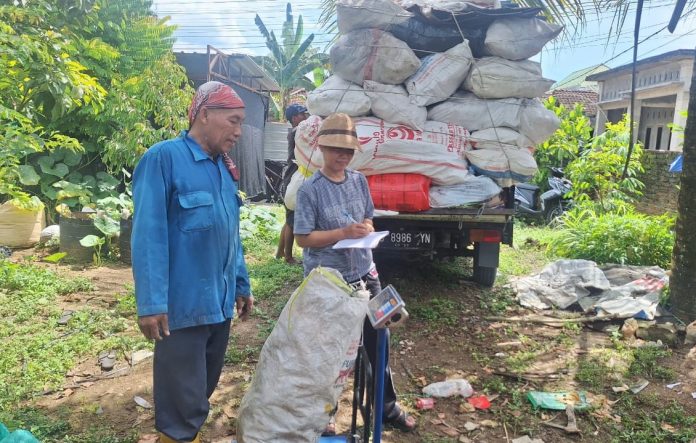

TULUNGAGUNG – Tulungagung waste management has become a growing priority as local authorities push households to sort and process waste before it reaches collection points and landfills. Officials believe the strategy can significantly reduce the volume of waste generated across the regency.
Acting Regent Ahmad Baharudin said Tulungagung can no longer rely solely on transporting waste to temporary disposal sites and final landfills. Instead, authorities want residents to take a more active role in managing waste at its source.
According to Baharudin, environmental protection requires cooperation from all sectors of society. He stressed that government agencies, businesses, schools, community groups, and residents must work together to build a cleaner and more sustainable environment.
“Environmental protection is not only the government’s responsibility. Communities, businesses, educational institutions, and all stakeholders must move together so environmental conservation efforts can achieve optimal results,” he said.
Local officials view household waste sorting as one of the simplest and most effective solutions. Residents can separate recyclable materials, organic waste, and non-recyclable items before disposal. This practice makes recycling and waste processing more efficient.
Baharudin noted that mixed waste often creates additional challenges for waste management facilities. In contrast, sorted waste allows recycling centers and waste processors to recover more materials that still hold economic value.
Acting Head of the Tulungagung Environmental Agency (DLH), Anang Pratistianto, said households remain the largest source of waste generation in the regency. As a result, public participation plays a crucial role in the success of any long-term waste reduction program.
He explained that changing daily habits represents a key step toward improving environmental management. Authorities hope residents will adopt waste sorting as part of their routine household activities.
“Through this movement, we want to build a new culture of waste management. Sorting waste at home is a simple action that can create a major impact on the environment,” Anang said.
The initiative also reflects a broader shift in Tulungagung’s waste management policy. For years, the system focused mainly on collecting and transporting waste. Officials now want to prioritize prevention, reduction, and recycling before waste enters the disposal chain.
The local government expects household waste sorting to reduce the amount of waste sent to temporary collection sites and landfills. At the same time, the program can increase the reuse of recyclable materials and support a more circular economy.
Through this household-based approach, Tulungagung aims to reduce environmental pressure, improve waste management efficiency, and encourage stronger public awareness about sustainable living.