
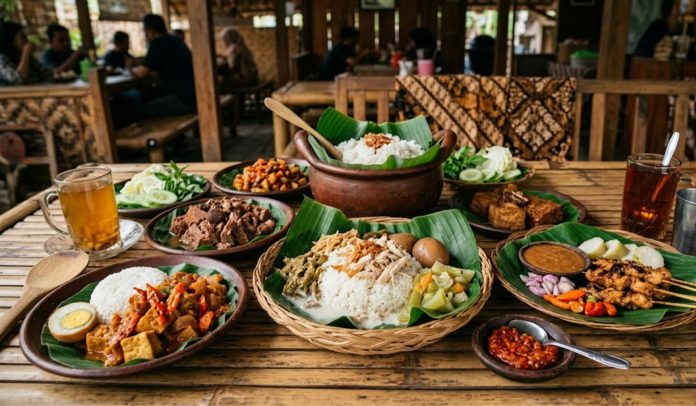

JAKARTA – East Java street food is rapidly becoming one of Indonesia’s hottest tourism attractions in 2026 as international travelers seek authentic culinary experiences beyond mainstream destinations. Traditional dishes including rawon, lontong balap, sate Madura, and bakwan Malang are now widely featured across travel platforms and food-focused social media content.
Tourism analysts say the rise of culinary exploration has shifted traveler preferences toward regional foods with strong cultural roots. East Java, known for its bold flavors and historic recipes, has emerged as a leading destination for food tourism in Southeast Asia.
The popularity of East Java street food has also been fueled by digital creators documenting local markets, roadside food stalls, and late-night culinary scenes in Surabaya, Banyuwangi, Malang, and Madura.
Many of these traditional dishes remain affordable despite growing popularity, making them accessible to travelers from various backgrounds. Visitors are increasingly interested in foods prepared using original methods rather than commercialized modern versions.
Traditional Culinary Icons Gain Worldwide Attention
Rawon remains among the most recognizable foods from East Java. The black beef soup gets its distinctive dark color from keluwek nuts and is often served with rice, crackers, bean sprouts, and salted eggs. Culinary experts consider the dish one of Indonesia’s most unique soups because of its earthy and aromatic flavor.
Another globally discussed dish is sate Madura, grilled skewered meat covered in peanut sauce and cooked over charcoal flames. The dish has become a symbol of Indonesian street food internationally and can now be found in many countries outside Indonesia.
Rujak cingur also continues attracting culinary adventurers due to its unusual combination of vegetables, fruits, lontong, and boiled beef snout mixed with thick shrimp paste sauce. The dish reflects the daring flavor combinations commonly found in East Java cuisine.
Lontong balap, traditionally eaten for breakfast or lunch, combines rice cakes, bean sprouts, tofu, lento cakes, and savory broth. The dish remains especially popular in Surabaya and surrounding regions.
Street vendors selling tahu tek continue to preserve traditional selling methods by tapping metal pans during preparation. The unique sound has become part of East Java’s culinary identity and street food atmosphere.
Regional Cuisine Highlights Local Ingredients and Heritage
Food researchers note that East Java cuisine strongly reflects local geography and agricultural resources. Coastal areas contribute seafood-based dishes like lontong kupang, while inland regions focus more heavily on beef, peanuts, vegetables, and spicy sambals.
Banyuwangi has become increasingly famous for dishes such as nasi tempong and rujak soto. Nasi tempong features rice, vegetables, fried side dishes, and extremely spicy sambal, while rujak soto combines vegetable salad with savory soup broth.
Lamongan’s culinary reputation continues growing through soto Lamongan and tahu campur. Soto Lamongan is known for its koya topping that thickens and enriches the broth, while tahu campur blends beef, tofu, noodles, cassava cakes, and savory soup.
In Gresik, nasi krawu remains a symbol of traditional dining culture. The dish is typically served on banana leaves with shredded beef, coconut serundeng, and sambal, and is commonly eaten by hand.
Traditional snacks and drinks also remain part of the culinary experience. Dawet beverages and regional crackers are frequently served alongside heavier meals to balance East Java’s strong flavors.
Food Tourism Drives Cultural Preservation Efforts
Local tourism communities believe the growing popularity of East Java street food is helping preserve traditional recipes and cooking techniques. Many younger food entrepreneurs are now reopening family businesses or creating modern versions of traditional eateries.
Culinary festivals across East Java have also become major tourism attractions, introducing travelers to regional dishes that were previously less known outside local communities.
Bakwan Malang, famous for its beef meatballs and crispy wontons, remains one of the most popular comfort foods among visitors exploring Malang’s cooler climate and street food scene.
As culinary tourism continues evolving in Indonesia, East Java street food is proving that traditional cuisine can remain competitive in the digital era. For travelers seeking authentic taste, cultural history, and memorable dining experiences, the province’s legendary dishes continue to offer some of the country’s most unforgettable flavors.