

TRENGGALEK – Calls for education reform intensified in Trenggalek after a student organization staged protests and held a public hearing with local lawmakers over mounting problems in the region’s education system.
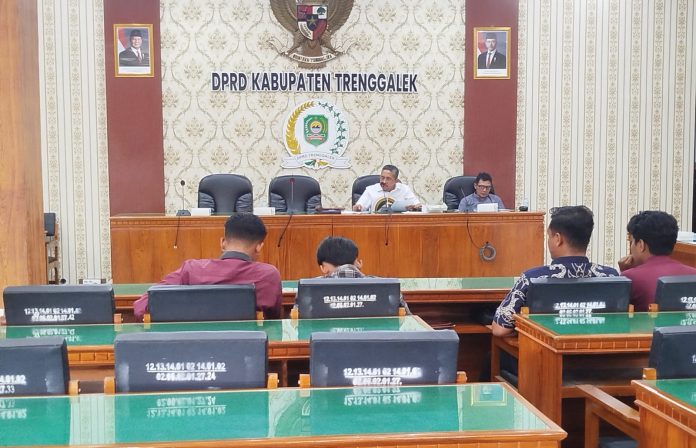
The Trenggalek branch of the Gerakan Mahasiswa Nasional Indonesia, or GMNI, continued its campaign on Monday by meeting members of the regional legislative council at the local parliament office.
During the hearing, student representatives highlighted several major concerns, including limited access to education, violence in schools, shortages of teachers, and alleged misuse of education funds.
GMNI Trenggalek chairman Rian Pirmansah said the current education crisis involves more than access to schools. He argued that authorities also need to address moral issues and weak protection systems inside educational institutions.
“The right to education is clearly guaranteed by the constitution, but in reality many children still do not receive that right,” Rian said.
According to GMNI data, around 3,750 school-age children in Trenggalek remained outside the education system in 2025. The organization described the figure as evidence of the government’s failure to fulfill its constitutional responsibility.
The group also criticized the continued presence of violence in educational environments. Rian specifically referred to sexual violence cases that are still under legal proceedings.
“Educational institutions should provide a safe environment. Without that, it will be difficult to build intelligent and empowered future generations,” he said.
GMNI further accused the Trenggalek administration and local education office of failing to solve long-standing structural problems.
The organization pointed to vacancies for principals at 53 elementary schools and 10 junior high schools across the regency. GMNI also reported a shortage of around 1,114 teachers and education staff.
“This situation reflects weak education governance in the region,” Rian added.
Student activists also criticized alleged illegal fees and misuse of education assistance programs. GMNI highlighted concerns surrounding the Indonesia Smart Program, known as PIP, which provides financial aid for low-income students.
“This is a betrayal of children’s rights. Education funds should never face deductions for any reason,” Rian stressed.
Infrastructure problems also became part of the discussion during the hearing. GMNI cited conditions at SDN 3 Pogalan, where damaged road access and low student enrollment continue to affect school activities.
Because of those issues, the organization argued that education reform has become an urgent necessity rather than an optional policy.
During the meeting, GMNI urged local authorities to accelerate programs for out-of-school children, recruit more teachers, strengthen student protection systems, and take firm action against misuse of education budgets.
The group also rejected the commercialization of education and called for more transparent oversight of public education spending.
“Through this protest and hearing, we hope the local government immediately takes concrete action that supports ordinary people so education truly becomes a basic right accessible to everyone,” Rian said.
Meanwhile, Sukarodin, chairman of Commission IV at the Trenggalek Regional Legislative Council, welcomed the students’ input during the hearing.
He said lawmakers would discuss the issues further with the regional education office because many of the concerns require joint solutions from policymakers.
“There are many problems that require collective attention, so we will certainly follow up on these constructive recommendations,” Sukarodin said.