
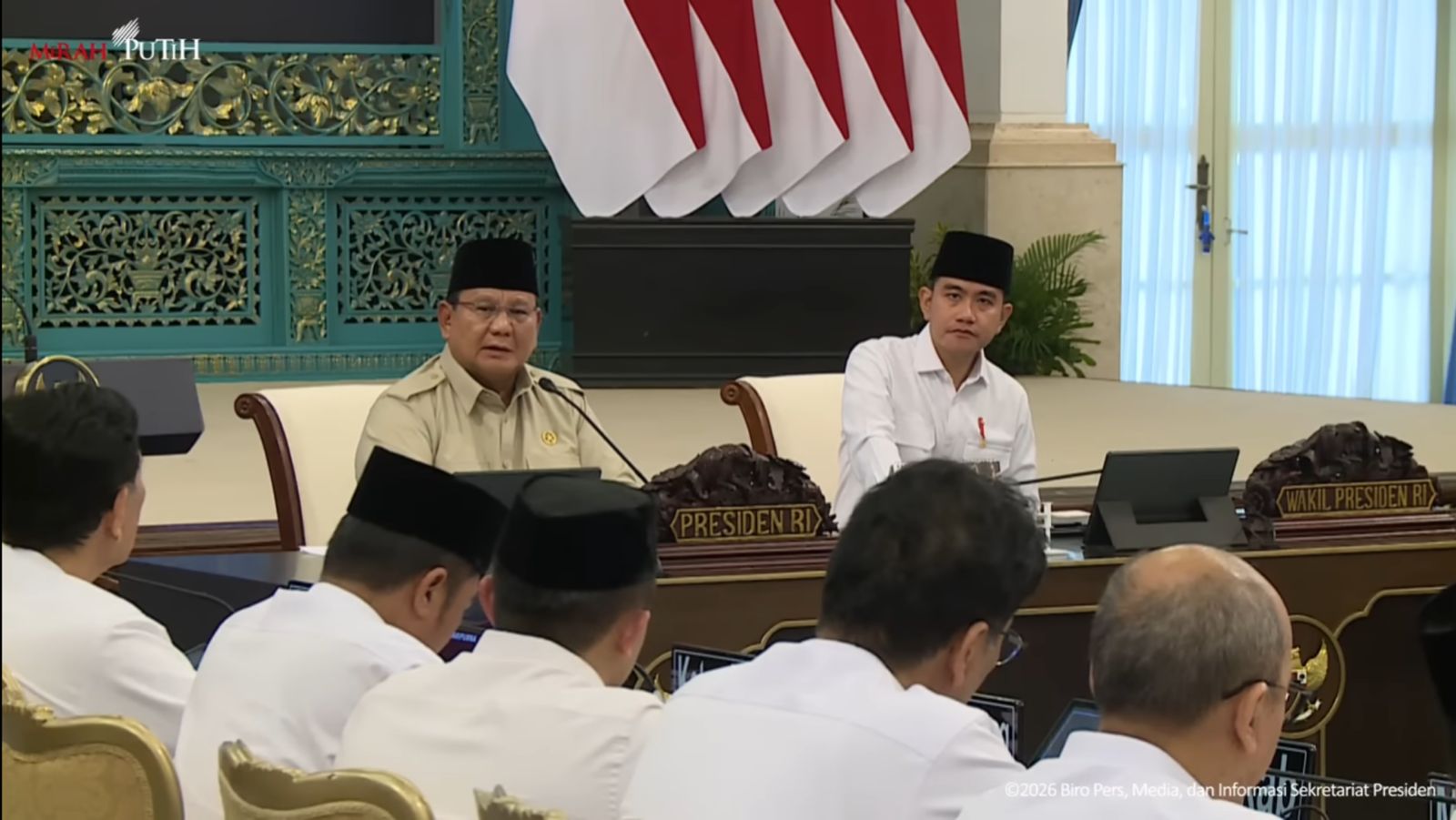

RADAR TULUNGAGUNG – President Prabowo Subianto has asked ministers to review a work from home policy as part of a national fuel-saving strategy after global tensions in the Middle East increased concerns over rising oil prices.
The work from home policy became one of the main topics during a plenary cabinet session at Istana Negara on Friday. Prabowo said Indonesia must prepare early because global developments in Europe and the Middle East may directly affect domestic fuel prices.
According to Prabowo, the work from home policy could help reduce fuel consumption if oil prices continue to climb. He also warned that higher fuel prices may quickly push food costs higher across the country.
Government Starts Reviewing Fuel Efficiency Measures
During the cabinet session, Prabowo stressed that Indonesia cannot assume global pressure will have no impact. He said the government must act before energy costs create wider economic pressure.
He explained that fuel remains a strategic sector because transportation costs influence logistics, market prices, and household spending.
Although Indonesia has secured key food supplies, he said preventive action remains necessary. The government also plans to accelerate several energy programs already under preparation.
Prabowo urged ministries to focus on practical savings. He said reducing fuel consumption must begin with measures that directly lower daily mobility.
Work From Home Policy Seen as Immediate Option
The president pointed to international examples while explaining the policy review. He mentioned that several countries have already introduced strict savings measures after energy prices became unstable.
He cited Pakistan as one example. According to Prabowo, Pakistan cut office attendance and ordered half of government and private sector workers to stay home.
The country also shortened the workweek to four days. Prabowo said Indonesia could study similar steps without copying them entirely.
“This is only an example, but we need to study how many days can be adjusted,” he said.
He added that Indonesia had already proven remote work could function effectively during the COVID-19 period.
Pandemic Experience Supports Remote Work Discussion
Prabowo recalled that many offices continued operating when employees worked from home during the pandemic. He said that policy helped reduce traffic in major cities and saved large amounts of fuel.
According to him, similar efficiency can still be achieved if civil servants reduce commuting days. He believes office attendance arrangements can lower congestion and cut daily fuel demand.
The government may study rotating attendance, shorter office schedules, or limited remote work in selected institutions.
Wider Budget Cuts Also Enter Government Discussion
Besides remote work, Prabowo asked ministers to examine other savings options. He highlighted how Pakistan reduced ministerial salaries, cut parliamentary expenses, and limited official vehicle use.
Pakistan also stopped purchasing new government vehicles and air conditioners. The country suspended foreign visits and redirected savings to vulnerable groups.
Prabowo said Indonesia needs the same spirit of efficiency, even though domestic conditions remain stable.
“I believe Indonesia will be strong in two or three years, but we still must save consumption now,” he said.
Fuel Prices and Food Security Stay Under Watch
The government continues to monitor global oil movements because conflict in the Middle East can quickly affect import costs.
Prabowo warned that fuel prices often become the first trigger before food inflation follows. That is why ministries are reviewing technical steps before making formal decisions.
No regulation has been issued yet, but officials may soon complete internal simulations.
If approved, the work from home policy could become one of the first major efficiency measures introduced under Prabowo’s administration. The policy would focus on fuel savings, lower mobility, and stronger resilience against global economic shocks.