
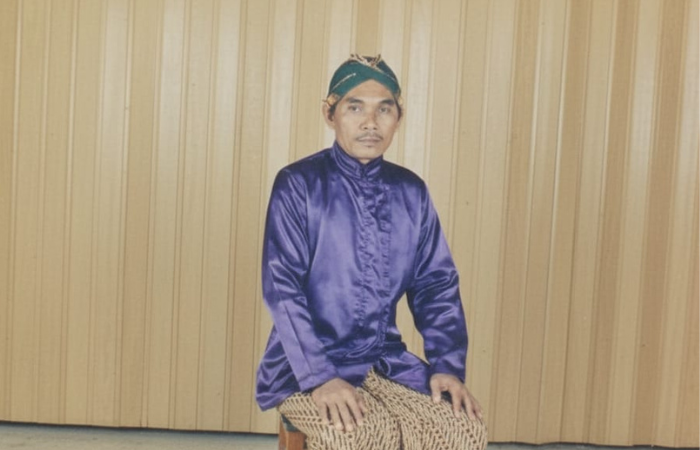

TULUNGAGUNG – The family of Yono Prawito, the renowned tayub drum maestro from Tulungagung, remembers him not only as a legendary musician but also as a humble and humorous father at home.
Behind his reputation in traditional Javanese music, relatives say Yono lived a simple life and rarely showed anger toward his children. Instead, he filled family moments with jokes and warmth.
His daughter, Purna Istriati, still clearly recalls how her father’s musical journey began under difficult circumstances. As a teenager, Yono practiced drumming using simple tools because the family could not afford proper instruments.
“He used empty cans as practice drums,” Purna said with a smile. “He carried the cans and tapped them repeatedly. Sometimes he also secretly watched rehearsals at local studios because our family faced financial difficulties at that time.”
Although Yono only completed elementary school, his passion for music helped him develop extraordinary skills. Through self-learning and constant practice, he gradually built his reputation as a tayub kendang player.
Inspiration for his music often appeared at unexpected moments. According to Purna, her father sometimes composed songs while returning home from performances.
“There was a time when he walked home from a show at the town square while it was drizzling,” she recalled. “By the time he reached home, he had already created a new song.”
At home, however, Yono showed a different side of his personality. While he maintained strict discipline when teaching students, he treated his own children with patience and humor.
“My father was very funny. He almost never scolded us,” Purna said.
Beyond performing and composing, Yono also dedicated much of his life to teaching young drummers. Anyone interested in learning tayub music could study with him free of charge.
“He simply wanted to preserve the culture,” Purna explained. “If someone came to learn, he would gladly teach them.”
As a result, many of his students later spread across various regions, including Tulungagung, Trenggalek, and Ponorogo. His reputation even reached international researchers.
In 1987, a student from the United Kingdom visited Batangsaren village to study tayub music and learn directly from Yono Prawito.
For the family, the most valuable legacy he left behind is not material wealth but the hundreds of songs he composed during his lifetime.
“The most precious thing he left us is his music,” Purna said. “Those songs are a legacy that must be preserved.”
Yono Prawito is survived by five children: Rudi Margono, Arik Siswati, Adi Riaman, Purna Istriati, and Kuntari Pujiastuti.
The family hopes musicians will continue performing and arranging the maestro’s works while still acknowledging him as the original composer.
“Anyone can perform or rearrange the songs,” Purna said. “But they should always include the name of the composer.”