Tag: Ramadan

  • Blood Supply in Tulungagung Drops During Ramadan as PMI Expands Evening Donation Services Before Eid

    Blood Supply in Tulungagung Drops During Ramadan as PMI Expands Evening Donation Services Before Eid

    TULUNGAGUNG – The blood supply in Tulungagung has declined during Ramadan this year, pushing Indonesian Red Cross Tulungagung to strengthen emergency collection efforts as demand from hospitals remains steady ahead of Eid.

    Officials at the local blood donation unit said the decline appeared earlier than in previous years. They noted that Ramadan usually begins with stronger reserves, but this year available stock opened at a lower level.

    To prevent shortages, PMI launched an additional evening donation service at GOR Lembu Peteng. The temporary post allows residents to donate blood after breaking their fast, with operations running daily from 5 p.m. until 8 p.m.

    Rukmi, head of the blood donation unit, said initial stock this Ramadan reached only around 800 bags.

    In previous years, opening stock often reached around 1,000 bags, giving hospitals more flexibility during the first weeks of fasting.

    “This year the supply is lower than usual. During the last five years, we never needed to open a special evening service like this, but now we must take additional steps because stock has dropped,” she said.

    The latest data show that total blood stock currently stands at around 680 bags.

    That figure includes several blood components, including platelets and frozen plasma, but packed red cells remain the most frequently requested supply for hospitals.

    Among all blood groups, type B has become the most limited and now sits below 100 bags.

    Blood type O currently reaches 159 bags, while type A stands at 146 bags.

    Type AB remains relatively stable at 71 bags.

    PMI records around 455 bags of packed red cells across all blood groups, making that component the most closely monitored in daily hospital distribution.

    Rukmi said blood type B requires the most urgent public response because hospitals continue requesting it regularly.

    Even with the decline, PMI says hospital blood banks across Tulungagung remain under control.

    The local branch continues supplying major medical facilities, including RSUD dr Iskak, RS Bhayangkara Tulungagung, and RSUD dr Karneni.

    Officials continue monitoring requests every day because hospital demand often shifts quickly during Ramadan.

    PMI also maintains an active emergency network with nearby regions.

    If local supply falls too far, Tulungagung can request blood support from Kediri, Blitar, and Malang.

    The same cooperation applies in reverse when neighboring areas face shortages.

    “If stock here becomes empty, we can ask for support from nearby regions, and they can request help from us when needed. Our priority is making sure hospitals in Tulungagung always receive blood when patients need it,” she said.

    PMI expects public participation to rise in the coming days as more residents become aware of the evening donation post.

    The organization believes stronger donor turnout will help secure reserves before Eid, when hospital demand often becomes harder to predict.
  • Blitar Prison Iftar Brings Emotional Family Reunion Behind Bars During Ramadan

    Blitar Prison Iftar Brings Emotional Family Reunion Behind Bars During Ramadan

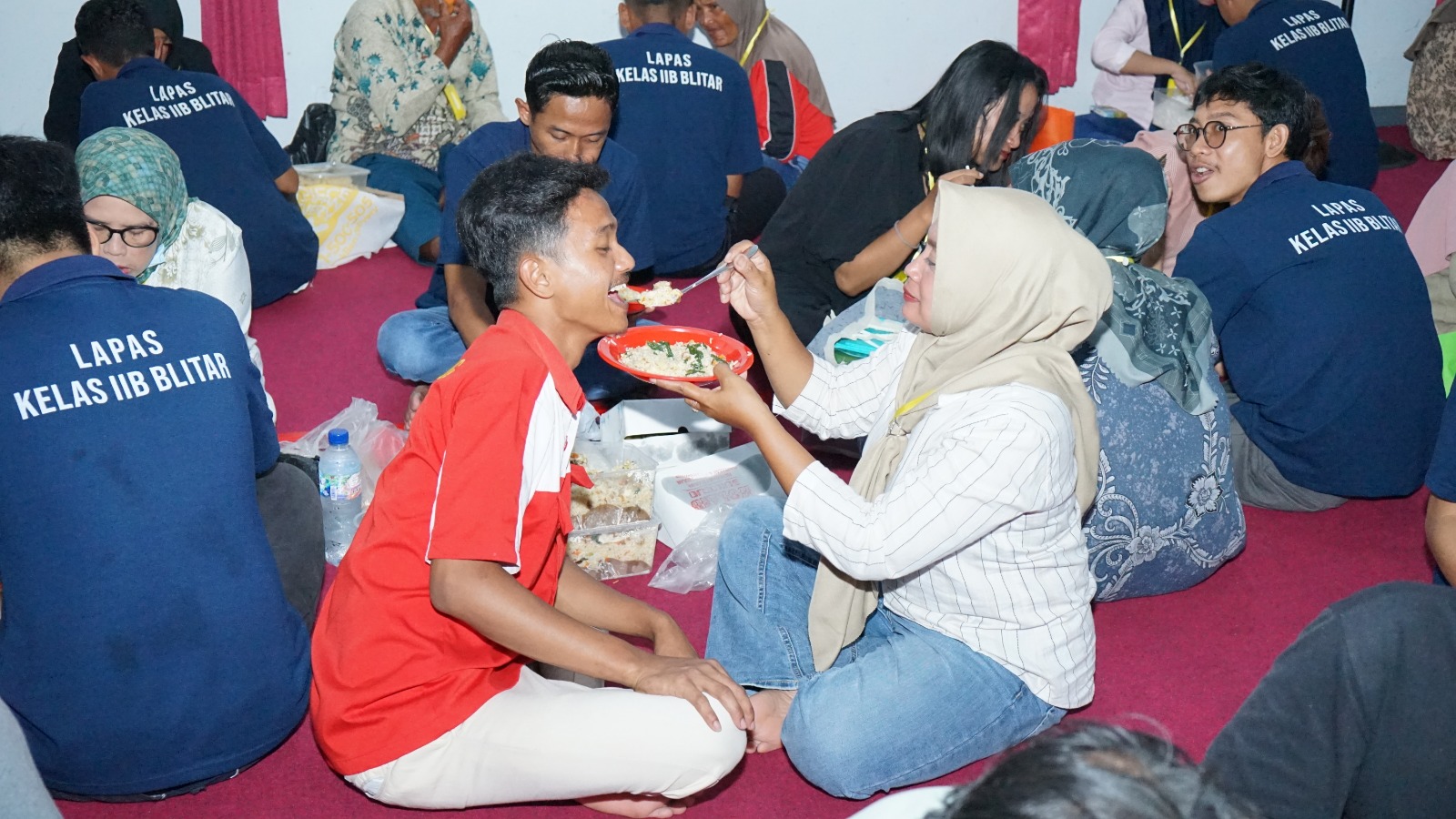
    BLITAR – The annual Blitar prison iftar at Blitar Class IIb Prison created an emotional reunion as inmates broke their fast with family members during Ramadan, offering a rare moment of closeness behind prison walls.

    The gathering took place on Tuesday afternoon inside the prison complex in Blitar. Dozens of inmates waited in the main hall before families were allowed to enter for the scheduled visit.

    Wearing blue and orange prison uniforms, inmates began gathering before 3 p.m. local time. Prison officers allowed family members to enter about an hour later, shortly before sunset.

    Because of limited space inside the facility, each inmate could receive only three relatives. Families met inmates in the main hall, while some visitors also used the courtyard as the crowd grew larger.

    Many families embraced their relatives as soon as they met. Some brought home-cooked meals in stacked food containers filled with favorite dishes prepared for the breaking of the fast.

    One inmate convicted in a narcotics case received a warm embrace from his wife moments after she arrived. The family spent the waiting time talking quietly and sharing stories before the evening call to prayer.

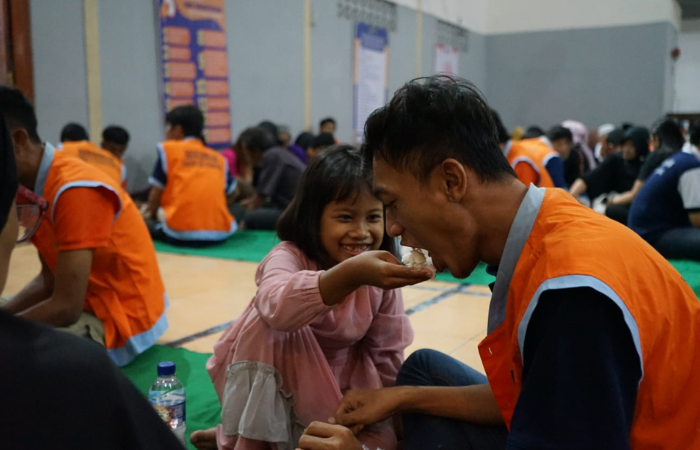
    When iftar began, the atmosphere turned visibly warmer. Children, wives, and parents fed inmates while conversations filled the hall that usually serves as a sports area.

    Prison officers, however, limited the shared meal to around 15 minutes. Several families asked for extra time, but officers kept the schedule unchanged.

    After the meal ended, officers directed inmates back to their cells. Some inmates immediately prepared for the Maghrib prayer, while relatives left the prison compound.

    Romi Novitrion, head of the prison, said the program forms part of the institution’s social reintegration effort.

    “This family iftar program supports social integration. It helps inmates and their families strengthen each other while preparing inmates for release,” he said.

    According to Romi, the initiative also reflects the restorative justice approach outlined in Indonesia’s legal framework.

    He said prison authorities organize the Ramadan gathering every year and hope it encourages inmates to continue following rehabilitation programs.

    “We hope inmates and their families can support each other. This moment allows them to ease their longing by meeting loved ones,” he said.

  • LPG 3kg Shortage Hits Parts of Trenggalek Ahead of Ramadan as Government Requests Extra Supply

    LPG 3kg Shortage Hits Parts of Trenggalek Ahead of Ramadan as Government Requests Extra Supply

    TRENGGALEK – An LPG 3kg shortage has begun affecting several areas in Trenggalek Regency as demand rises ahead of Ramadan and Eid al-Fitr.

    Local authorities have asked Pertamina to increase the subsidized LPG quota to prevent wider supply disruptions during the holiday season.

    Agus Subchi, acting head of the economic affairs division at the regional secretariat, said the government had received several reports about limited LPG availability in a number of districts.

    “The shortages mostly occur in Pule District, Dongko District, and Panggul District. These areas sit in higher terrain, so distribution access is more difficult,” he said.

    The Trenggalek government has already sent two letters to Pertamina requesting additional subsidized LPG allocations. Pertamina later approved one request and delivered an extra 32 metric tons to the region.

    Officials have now submitted another request to prepare for rising demand during Ramadan.

    “We have sent another letter to Pertamina asking for an additional quota before Ramadan and Eid. We are still waiting for their response,” Subchi said.

    Two LPG filling stations currently supply gas across Trenggalek. One operates in Karangsoko and the other in Kedunglurah.

    Together, these facilities distribute LPG to 14 districts. Each station releases about 40 tons per day, bringing the region’s daily supply to around 80 tons.

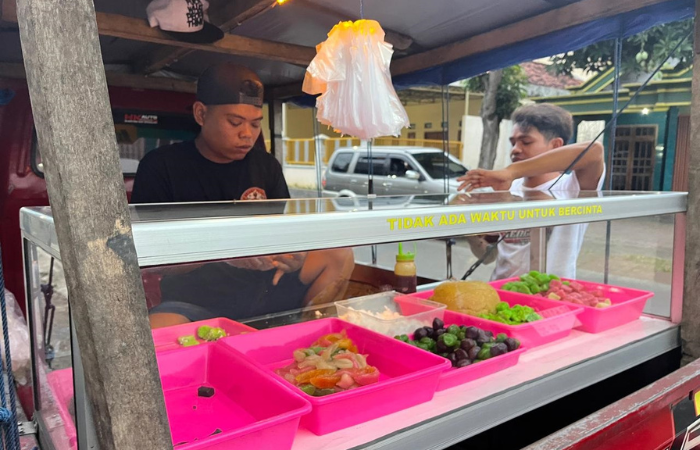
    Demand usually increases during Ramadan. Families cook more meals at home, and many street vendors prepare traditional Ramadan snacks known as takjil.

    “During Ramadan, household consumption rises. Many food vendors also use LPG to prepare takjil,” Subchi explained.

    Weather conditions have also affected supply. Strong winds recently slowed marine shipments carrying LPG to the region.

    “SPBE managers told us that rough weather delayed several deliveries by sea,” he added.

    To monitor the situation, the local government and regional leadership forum inspected LPG filling stations last Friday. Prosecutors, police officers, and military personnel joined the inspection.

    Officials checked supply levels and reviewed distribution procedures to ensure LPG reaches official distribution bases and local communities.

    Currently, a 3-kilogram LPG cylinder costs about Rp16,000 at official bases. Retail prices can reach around Rp18,000 per cylinder.

    Local authorities now hope Pertamina will approve the additional quota soon so residents can secure enough cooking fuel during Ramadan and Eid.

  • Sahur Wake-Up Tradition Lives On as Blitar Youth Use Bamboo Drums Instead of Loudspeakers

    Sahur Wake-Up Tradition Lives On as Blitar Youth Use Bamboo Drums Instead of Loudspeakers

    BLITAR – The sahur wake-up tradition continues to thrive in a small village in Blitar, where local youth choose traditional bamboo instruments rather than loudspeakers to wake residents before dawn during Ramadan.

    In Dusun Termas, part of Kebonduren, young residents organize nightly patrols known as ronda sahur. The activity involves walking around the neighborhood while playing bamboo slit drums, locally called kentongan, to alert Muslims it is time to eat before fasting begins.

    The village lies in Ponggok, where the sahur wake-up tradition has existed for generations. Despite the growing use of modern sound systems in many areas, the youth in Termas have chosen to preserve the older method.

    Muhammad Asyharil Ramadhani, one of the young participants, said the tradition has long been part of the village’s Ramadan culture.

    “It has existed for a long time. It has already become a tradition here,” he said Monday.

    According to Asyharil, the sahur patrol usually begins around 1 a.m. and continues until about 3 a.m. More than ten young residents often join the activity, although the number sometimes varies.

    During the patrol, the group walks through village streets while rhythmically hitting bamboo kentongan. The sound serves as a gentle signal for residents to wake up and prepare their pre-dawn meal.

    Asyharil explained that the youth deliberately avoid using large loudspeakers. They believe traditional instruments create a calmer atmosphere and reduce noise disturbance for people who are still resting.

    “Using traditional instruments feels better. Loud sound systems can disturb people who are sleeping. With bamboo instruments, the atmosphere feels more peaceful and residents like it,” he said.

    Beyond waking people for sahur, the activity also strengthens community ties among young residents. The tradition continues to attract participation from the village’s younger generation each Ramadan.

    While many communities now rely on modern speakers and recorded music, the youth of Dusun Termas maintain a simpler approach. Their creativity helps preserve local culture while creating a warm and communal Ramadan atmosphere.

    For the villagers, the nightly sahur patrol represents more than just a wake-up call.

    “What matters most is that we stay united and maintain harmony among residents,” Asyharil added.

  • Tulungagung Prison Iftar Reunites Inmates and Families in Emotional Ramadan Gathering

    Tulungagung Prison Iftar Reunites Inmates and Families in Emotional Ramadan Gathering

    TULUNGAGUNG – The Tulungagung Prison Iftar at Class IIB Correctional Facility in Tulungagung brought rare moments of reunion and emotion as dozens of inmates broke their fast with family members during Ramadan.

    While dark clouds hovered over the prison complex on Tuesday afternoon (March 3), warmth filled the main hall inside. Neatly arranged floor mats lined the room, and homemade meal packages sat ready, waiting for sunset.

    For a few hours, the high walls and iron bars felt less rigid. The prison administration allowed dozens of inmates to sit side by side with parents, spouses, siblings, children, and close companions in a special iftar gathering.

    Among them was Muhammad Dian Setiawan, 25, a Tulungagung resident serving a five-year sentence. He has completed part of his term and still has 2.6 years remaining.

    This Ramadan, however, felt different. He shared the iftar meal with his mother and two younger siblings.

    As the eldest of three, Dian stayed close to his family throughout the event. His youngest sister sat beside him, occasionally laughing before hugging and kissing her brother’s cheek. Dian lifted her onto his lap, cherishing the moment.

    “Moments like this may not come again,” he said softly.

    When the Maghrib call to prayer echoed, the hall shifted from silence to emotional chatter. Families opened food packages, and the aroma of home-cooked dishes spread across the room.

    Dian began eating, yet several times his little sister playfully fed him instead. Months of longing seemed to dissolve in that brief sunset reunion.

    Rizzal Arbi Fanani, head of inmate development and work programs at the prison, said the Tulungagung Prison Iftar aims to strengthen family ties.

    “Inmates deeply need communication with their families. Therefore, we organize this iftar gathering so relationships remain strong,” he said.

    Officials recorded around 110 visitors that day, representing 70 inmate families. Each inmate could receive up to four visiting family members.

    According to Rizzal, the event marked the 10th day of Ramadan. The prison plans to hold similar gatherings again on March 12 or March 14, pending approval from the prison warden.

    During Ramadan, the facility schedules iftar gatherings twice a month, or once every 10 days of fasting.

    Although the atmosphere felt warm and family-oriented, authorities maintained standard security procedures.

    Officers conducted routine body and item checks before visitors entered the hall. The prison management also applied detailed risk mitigation measures to prevent any security breaches.

    Through the Tulungagung Prison Iftar, officials hope to balance strict correctional discipline with emotional rehabilitation. For inmates like Dian, the evening offered more than a meal, it restored a sense of belonging, even if only for a few hours.

  • Traditional Takjil in Tulungagung: Lupis and Cenil Drenched in Palm Sugar Dominate Ramadan Markets

    Traditional Takjil in Tulungagung: Lupis and Cenil Drenched in Palm Sugar Dominate Ramadan Markets

    TULUNGAGUNG – Traditional takjil in Tulungagung continues to draw large crowds during Ramadan, as residents flock to street stalls in search of classic sweet treats to break their fast. Despite the growing popularity of modern snacks, time-honored delicacies such as lupis and cenil remain the top choice for many.

    Ramadan in Indonesia is synonymous with “takjil hunting,” a pre-iftar ritual where people buy light bites before sunset. In Tulungagung, East Java, the enduring appeal of traditional takjil reflects both nostalgia and practicality. The sweet flavors are considered ideal for restoring energy after hours of fasting.

    Lupis, made from glutinous rice wrapped in banana leaves and boiled until tender, offers a chewy and filling texture. It is typically served with freshly grated coconut and generously drizzled with thick liquid palm sugar. The combination of savory coconut and rich sweetness has made lupis a staple appetizer before the main meal.

    Equally popular is cenil, known for its vibrant colors and eye-catching presentation. Made from tapioca flour, cenil has a soft, chewy consistency and a mild sweetness that pairs perfectly with shredded coconut and palm sugar syrup. Its playful appearance makes it especially appealing to children and young buyers.

    Beyond taste and tradition, affordability plays a key role in sustaining demand. Lupis and cenil are sold at accessible prices, ensuring they remain competitive amid a wave of trendy Ramadan snacks.

    Every Ramadan, vendors set up stalls across city corners and traditional markets, where long queues form ahead of iftar. For many residents, buying traditional takjil in Tulungagung is not just about satisfying hunger, it is also about preserving culinary heritage and reliving cherished memories of past Ramadans.

  • Ramadan Takjil Market in Blitar Draws Crowds, Visitors Complain of Parking Overcharges

    Ramadan Takjil Market in Blitar Draws Crowds, Visitors Complain of Parking Overcharges

    BLITAR – The Ramadan takjil market in Blitar is drawing large crowds of residents seeking food and drinks for iftar. Each afternoon, Jalan Kenanga turns into a busy seasonal bazaar filled with stalls and visitors.

    By 3 p.m., authorities close the street east of the mayor’s office to traffic. Vendors quickly set up stands selling traditional snacks, meals, and beverages. Nearby roads such as Jalan Merdeka and Jalan Mastrip serve as temporary parking areas.

    The Ramadan takjil market in Blitar has become a key hub of small business activity during the fasting month. Hundreds of traders sell affordable food for breaking the fast. Officials have urged them to ensure all products remain safe and fit for consumption.

    Oksania, a visitor from Garum district, arrived at about 4:30 p.m. She said the market was already lively but still comfortable to explore. It was her first visit to the bazaar.

    She praised the wide range of iftar options.
    “Some foods are delicious and worth trying, like wedang empon-empon and cenil,” she said Wednesday. “Overall, it’s a fun place to spend time before breaking the fast.”

    Another visitor, Saifullah, also enjoyed the experience. He said the many choices made it hard to decide what to buy.
    “There’s just so much food. Yesterday I ended up only buying a drink,” he said.

    Despite the festive atmosphere, some visitors reported parking fee irregularities. Oksania said a parking attendant charged her Rp 5,000 for a motorcycle. The official city tariff is Rp 2,000.

    She explained that a banner showing the official rate was small and partly blocked. As a result, many visitors may not notice it.

    Oksania urged authorities to increase supervision at the site. She also asked officials to install clearer and more visible parking signs. She warned that unfair fees could discourage repeat visits.

    Even with these complaints, the Ramadan takjil market in Blitar remains one of the city’s most popular ngabuburit destinations. Crowds continue to arrive daily to enjoy local iftar specialties.

  • Ramadan Takjil Packages Gain Popularity in Tulungagung as Home Vendors See Surging Demand

    Ramadan Takjil Packages Gain Popularity in Tulungagung as Home Vendors See Surging Demand

    TULUNGAGUNG – Ramadan takjil packages in Tulungagung are selling rapidly as residents seek practical and visually appealing snacks for breaking the fast. Home-based vendors report strong demand for assorted platters that combine popular sweet and savory treats.

    One typical takjil tray includes chocolate peanut cake, spring rolls, sticky rice rolls, and fruit tarts arranged neatly on a single platter. The mix of flavors makes it suitable for family iftar meals or sharing with neighbors.

    “These four items are the most requested during Ramadan. They are practical and suitable for both family meals and sharing,” said Kusuma, a local home food producer.

    She prepares all items fresh each day to maintain taste and hygiene. Orders usually peak shortly before sunset, when Muslims prepare to break the fast.

    Kusuma hopes her business helps residents access affordable and hygienic iftar snacks while preserving the appeal of traditional homemade treats during Ramadan.

    Traditional snacks remain popular across Tulungagung not only for daily consumption but also for social gatherings. However, some consumers associate market snacks with high sugar and fat content.

    Nutritionist Ratih Puspitaningtyas said that perception oversimplifies traditional foods. She explained that nutritional value depends on ingredients, composition, and preparation methods rather than the category of food itself.

    Traditional snacks typically contain rice, flour, coconut milk, eggs, or meat. These provide calories, carbohydrates, fats, and proteins needed for energy and body repair. Still, she advised consumers to choose carefully when selecting snacks during Ramadan.

  • Tulungagung Ramadan Takjil Market Passes Food Safety Checks With Zero Hazardous Substances

    Tulungagung Ramadan Takjil Market Passes Food Safety Checks With Zero Hazardous Substances

    RADAR TULUNGAGUNG – Authorities in Tulungagung, East Java, confirmed that all food and drinks at the SAVANA Ramadan takjil market are free from hazardous substances after an inspection on Wednesday (Feb. 26).

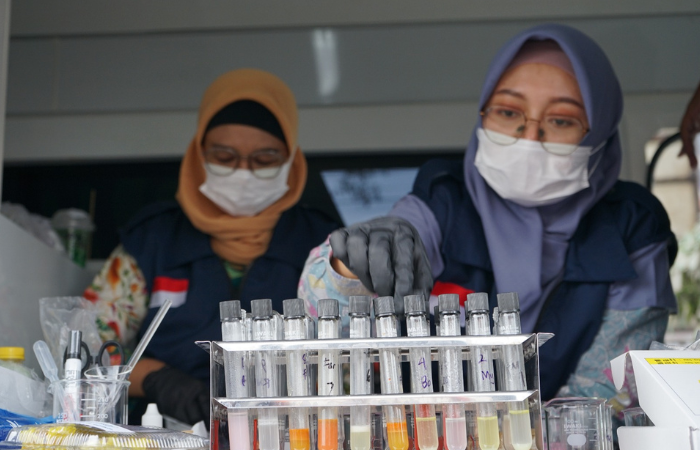
    Health officers took 30 random samples from vendors at the SAVANA (Sentra Aneka Variasi Takjil Nusantara) market. The market operates this year at the GOR Lembu Peteng complex. Rapid tests detected no banned chemicals in any sample.

    The Tulungagung Health Office conducted the inspection with Indonesia’s Food and Drug Monitoring Agency (BPOM). Officials run these checks every Ramadan as demand for ready-to-eat iftar snacks rises sharply.

    “We used rapid test methods, and all 30 samples were negative for hazardous substances,” said Desi Lusiana Wardhani, head of the Tulungagung Health Office.

    Inspectors screened foods for methanil yellow, rhodamine B, borax, and formalin. Samples included dumplings, meatballs, stuffed tofu, beverages, and other prepared snacks sold at the market.

    Desi said the inspection also supports small food businesses through guidance and mentoring. The health office has trained vendors on safe ingredients and handling practices for years.

    “These results show our education and assistance programs work well. Most vendors now follow the food safety standards we teach,” she said.

    Inspectors still found minor issues at several stalls. Some vendors displayed food without proper covers. Others needed better sanitation practices. Officers gave direct feedback on site so vendors could fix the problems quickly.

    Officials also placed stickers on stalls that joined food safety briefings. The labels show vendors understand safe food handling standards. Authorities say the Ramadan takjil market is safe for public consumption.

  • Es Teler Becomes Ramadan Favorite as Refreshing Drink Sells Out Fast at Tulungagung Market

    Es Teler Becomes Ramadan Favorite as Refreshing Drink Sells Out Fast at Tulungagung Market

    RADAR TULUNGAGUNG – Es teler has emerged as a top Ramadan favorite in Tulungagung, with the fruit-based iced drink selling out quickly on the first day of fasting as residents searched for refreshing options to break their fast.

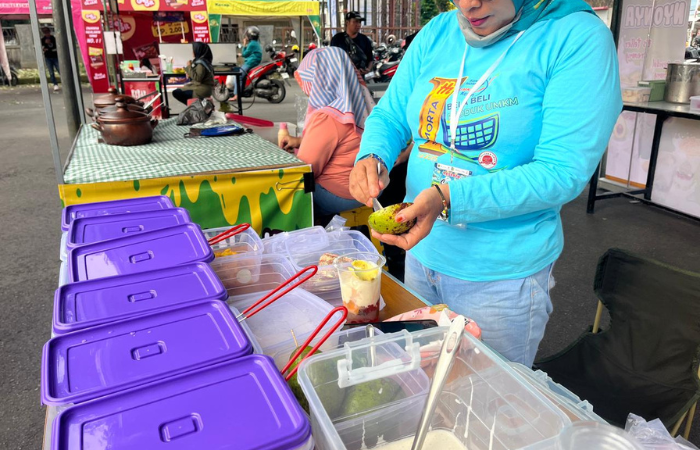
    At several Ramadan market stalls across the town, vendors reported that es teler, a mix of fruit, coconut milk, and syrup,  sold faster than other beverages. The surge reflects strong demand for sweet, cooling drinks after a day of fasting.

    One of the sellers benefiting from the trend is Sri Yanti, who trades at a local Ramadan market while also serving orders from her home in Sidorejo village, Kauman district. She said sales on the first day of Ramadan 1447 AH exceeded normal daily revenue, with customers arriving from early morning.

    “Thank God, the response on the first day was very good. Turnover was higher than usual, and many buyers came since morning,” she said.

    Sri Yanti said es teler remains popular because of its fresh, sweet taste, making it ideal for iftar. She prepares all products at home to maintain quality and hygiene. In addition to walk-in buyers at the market, she also received orders from regular customers who have known her products for about a year.

    She expects demand to keep rising throughout Ramadan. The seasonal spike offers an opportunity for local micro-businesses to boost income and expand their customer base. “Hopefully this Ramadan brings blessings and helps our business grow,” she said.

Tim dukungan pelanggan kami siap menjawab pertanyaan Anda. Tanyakan apa saja!