
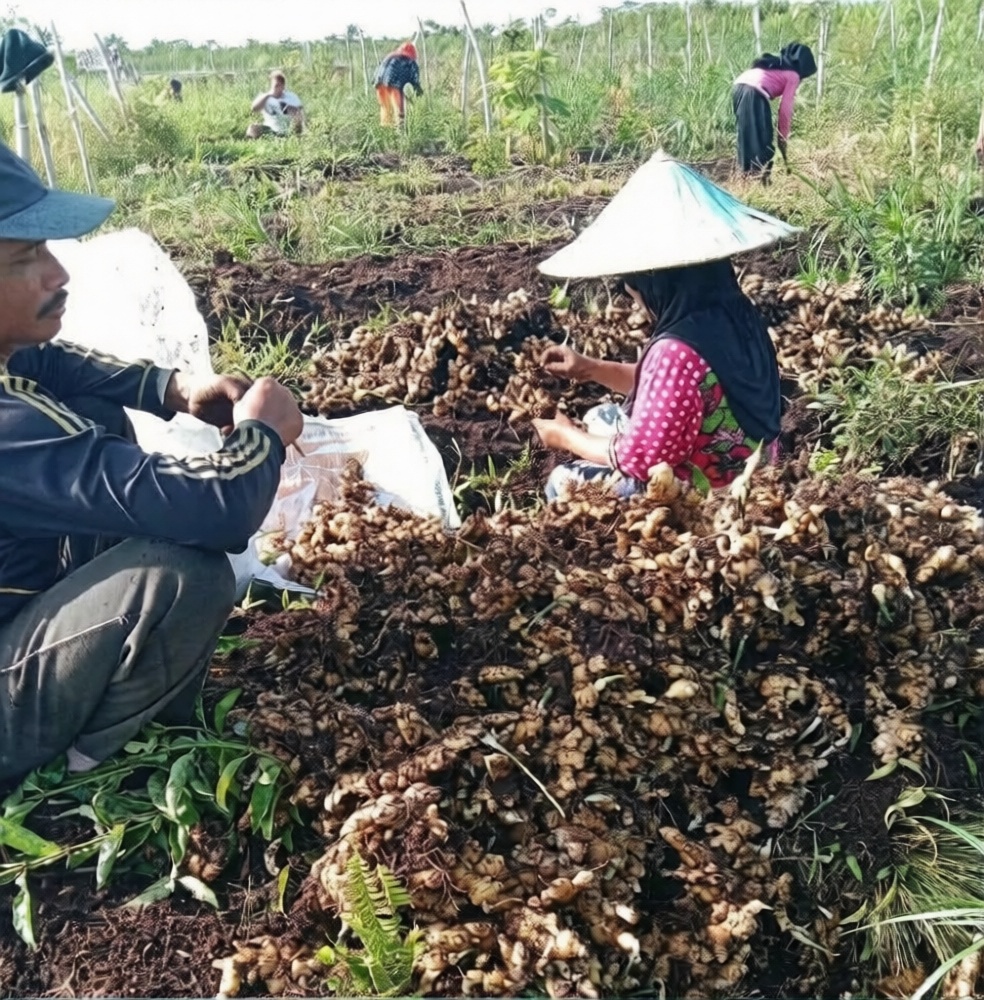

TRENGGALEK – Pule agricultural potential continues to grow as farmers in Pule expand the cultivation of spices and plantation crops. The highland district produces several commodities, especially red ginger and porang.
Located in the mountainous region of Trenggalek, the area has fertile soil and a cool climate. These conditions support the growth of various agricultural commodities.
Village Secretary Ratno said agriculture remains the main source of income for local residents. Most villagers rely on crops grown on dry fields, farms, and plantations.
“Pule District is one of the agrarian regions with strong agricultural and plantation potential in Trenggalek. The soil and highland climate support the growth of many leading commodities,” Ratno said Tuesday.
One of the fastest-growing crops in the area is red ginger. Farmers cultivate the spice widely because it grows well in the highland soil and offers strong market demand.
Several villages such as Pakel and Jombok have become well-known centers for high-quality red ginger production.
Farmers sell the spice not only for cooking but also for herbal medicine, pharmaceutical products, food processing, and cosmetics.
Local farmers have also expanded their marketing networks through cooperation with village-owned enterprises. This partnership helps farmers reach wider markets and increase their income.
Besides red ginger, porang cultivation has also grown rapidly in Pule District. The crop attracts strong demand in international markets because industries use its fiber in healthy food products, pharmaceuticals, and cosmetics.
The humid climate and sloping farmland create ideal conditions for porang cultivation. As a result, the crop opens new economic opportunities for farmers and attracts investors interested in agricultural processing.
Farmers in Pule also grow several staple crops such as rice, corn, peanuts, and cassava. These crops remain important food sources for local communities.
Meanwhile, farmers cultivate horticultural products such as chayote and long beans across village farmland.
Fruit plantations also contribute to the area’s agricultural diversity. Local farmers grow tropical fruits including bananas, jackfruit, avocados, durian, and water guava.
Recently, farmers have started developing superior avocado seedlings as part of agricultural diversification. This initiative aims to strengthen food security while creating new economic opportunities.
With strong natural resources and a large farming community, Pule Village continues to strengthen its role as one of the leading agricultural centers in Trenggalek.