
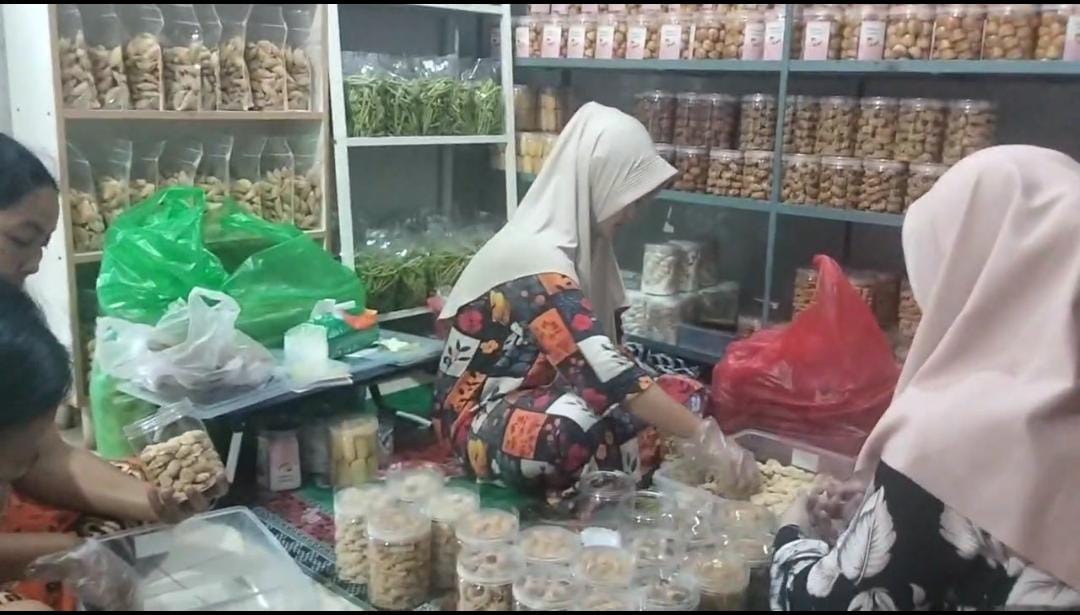

TULUNGAGUNG – A home baking business in Kedungwaru continues to grow steadily without outside financing, as entrepreneur Lulu Kusuma Wati expands production by reinvesting profits from each sales cycle instead of relying on bank loans.
From her home kitchen in Gendingan, Lulu gradually turned Griya Belfan Cake into a growing culinary business. Its products now reach several outlets, including stores in neighboring cities. What began as a small domestic activity now provides steady income for her family and nearby residents.
Lulu, 42, started the business in late 2017 after moving from Kediri. While caring for her first child at home, she spent spare time studying recipes and baking techniques through online tutorials. She then tested each recipe repeatedly in her own kitchen.
She said her parents shaped the financial principle she still follows today: buy equipment only when enough cash is available, even if expansion takes longer.
“My principle is simple: if I have money, I buy it; if not, I wait. I first collected profits to buy a hand mixer, then a small electric oven, and later a larger mixer when production became more stable,” she said.
Lulu added that she repeatedly declined offers for business loans, including government-backed microcredit programs. She wanted to avoid repayment pressure and keep full control over business decisions.
Her first production capital came from a Rp120,000 customer order paid in full before baking started. She used that payment to buy ingredients, complete the order, and continue production with the remaining profit.
Although market competition continued to grow, Lulu said her hardest challenge during the early years was dividing time between production work and childcare. She often baked while handling household duties throughout the day.
“At first my husband did not fully support it because our child was still very young. But I kept learning, practicing, failing, and trying again because baking always made me feel happy,” she said.
Demand later increased, especially during festive periods when dry cakes and banana pastries became more popular. Ahead of Eid, production usually rises sharply because customers place larger orders for family gatherings and gifts.
The business now creates additional income beyond Lulu’s household because she involves neighbors when orders increase. She first worked with relatives, while local residents in Gendingan now help during peak demand.
For Lulu, growing competition in Tulungagung’s banana pastry market does not create pressure. She believes customers return because each product carries its own character.
“I am not afraid of price or quality competition because every baker has a unique touch. Creativity is what keeps customers loyal and makes them come back,” she said.