
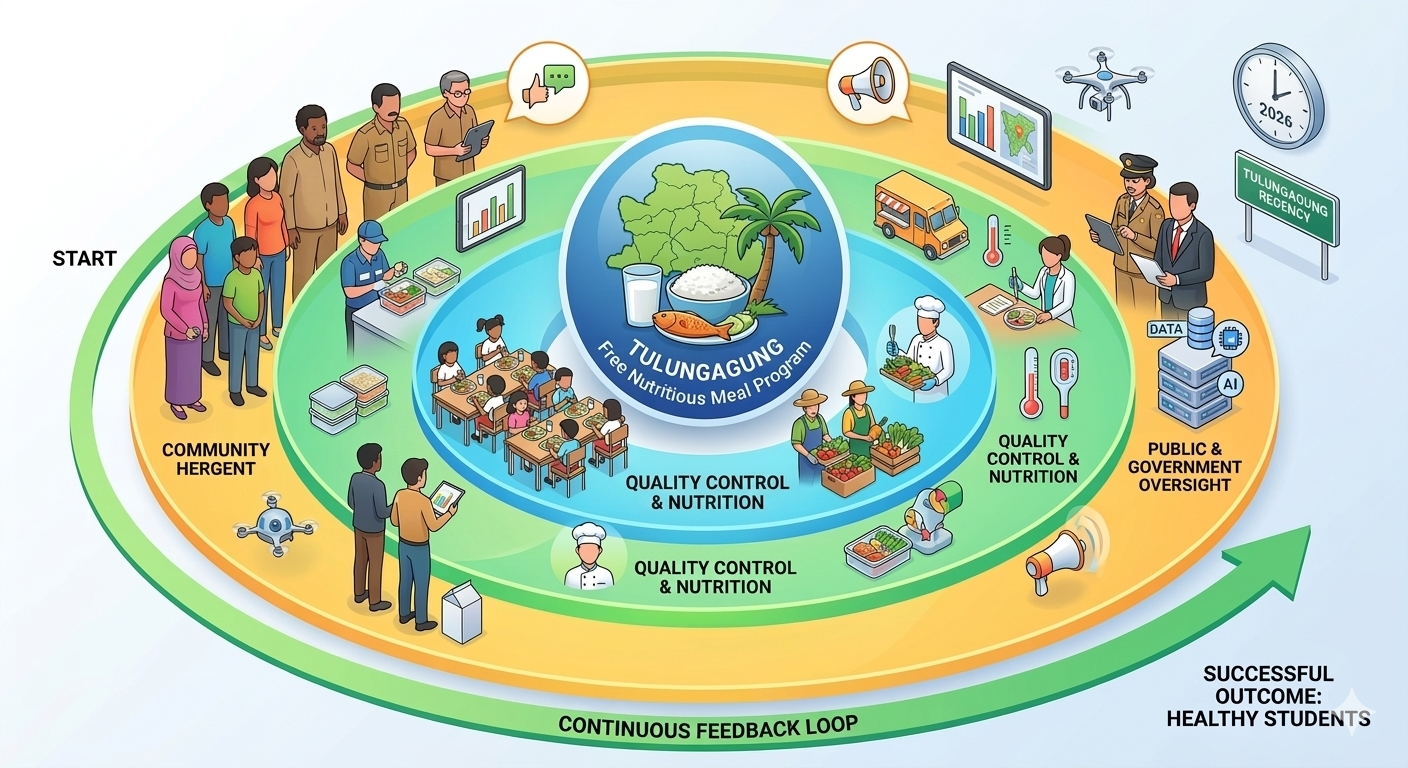

TULUNGAGUNG – Indonesia’s Free Nutritious Meal Program (MBG) has come under closer scrutiny after public debate over its budget and food quality in Tulungagung, East Java. A national lawmaker says the government has introduced stricter oversight and more transparent pricing to address the concerns.
Heru Tjahjono, a member of Commission IX of the House of Representatives of the Republic of Indonesia, said the program already follows a standard price structure. He added that officials have started to disclose the detailed cost of each food item in the menu.
“Earlier we explained that the standard price is Rp10,000 for raw ingredients in large portions. Now we have begun showing the price of each item as part of transparency,” Heru said on Wednesday while attending an event in Tulungagung.
However, he noted that food prices can vary across regions. Differences in local ingredient costs should not immediately trigger controversy.
“For example, the price of bread or bananas here may differ from prices in Karangrejo or other areas. These differences should be communicated clearly,” he explained.
Despite those variations, Heru stressed that the program must maintain both price standards and food quality. As a result, strict supervision remains essential to ensure the initiative meets its intended goals.
Since the early stages of the program, he said he had asked the head of the National Nutrition Agency to establish a special task force. This team would not only monitor implementation but also help ensure smooth distribution of meals.
“The task force does more than supervise. It also supports the president’s program so the benefits reach students properly, both in terms of quality, quantity, calories, protein, and overall nutritional content,” he said.
According to Heru, authorities have now deployed the task force across multiple administrative levels, including villages, districts, and regencies. Local legislative bodies, such as regional councils and the national Commission IX, also receive public complaints related to the program.
“Including Commission IX, of course, we receive reports and complaints from the public,” he added.
Meanwhile, the government plans to strengthen coordination through the regional office of the nutrition agency based in Surabaya. Officials expect the system to improve communication between the national agency and local task forces.
Heru said the layered monitoring system should help reduce controversy surrounding the MBG program. More importantly, it should ensure that the national initiative delivers real benefits for students who depend on the meals.