
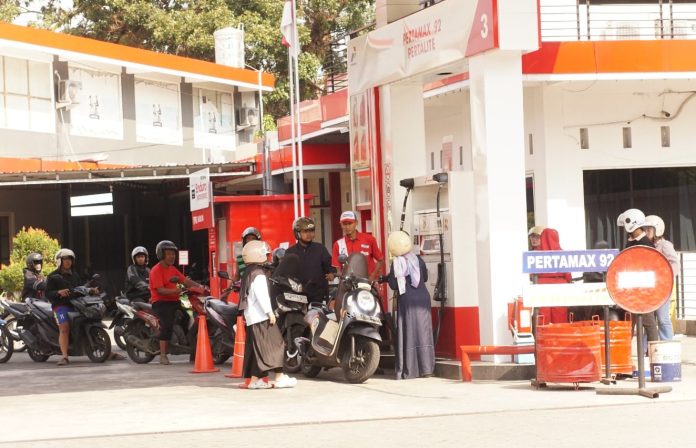

BLITAR – A sharp Pertamax price hike has begun reshaping fuel consumption patterns in Blitar, with many motorists switching to lower-cost Pertalite following the increase in non-subsidized fuel prices.
Several gas stations across Blitar City reported changes in purchasing behavior after Pertamax prices rose on Tuesday. The adjustment took effect at midnight and immediately affected consumer demand.
Rizki, a supervisor at a local gas station, said Pertamax prices increased from Rp 12,300 per liter to Rp 16,250 per liter. The significant jump prompted many regular users to reconsider their fuel choices.
“In the first days after the price increase, demand declined. Many customers who usually buy Pertamax have started switching to Pertalite,” Rizki said on Wednesday.
Before the increase, the station sold around 5,000 liters of Pertamax each day. Since the new pricing took effect, sales have dropped as more consumers look for cheaper alternatives.
Despite the decline in demand, Rizki said Pertamax supplies remain stable. Fuel deliveries continue without disruption, and the station has sufficient stock to meet customer needs.
“The Pertamax stock is safe, and supply remains smooth. The main change is the shift of consumers toward Pertalite,” he said.
Gas station operators now expect stronger demand for Pertalite in the coming days. To prepare for a possible surge, they have started adjusting inventory levels.
Under normal conditions, the station receives around 16 tons of Pertalite daily. Management plans to request additional supplies if demand continues to increase.
“We usually receive around 16 tons of Pertalite each day. If demand rises further, we can add another eight tons to anticipate customers moving from Pertamax,” Rizki explained.
The price increase has also sparked reactions from motorists. One Pertamax user, identified as Isnaini, admitted she was surprised by the adjustment.
“I was shocked. It feels like the price had not increased yesterday, and now it has gone up. If I had known earlier, I would have filled my tank completely,” she said.
Although many drivers are considering cheaper options, Isnaini said she intends to continue using Pertamax. Her work requires frequent travel, and she feels more comfortable relying on the higher-grade fuel.
“Because I spend most of my time working in the field, I will continue using Pertamax. I am not used to switching to Pertalite,” she said.
The shift in consumer behavior highlights how fuel price changes can quickly influence purchasing decisions. With Pertamax now significantly more expensive, gas station operators in Blitar expect more motorists to compare costs and adjust their fuel preferences in the weeks ahead.
As demand patterns evolve, fuel retailers continue monitoring stock levels to ensure both Pertamax and Pertalite remain available for customers across the city.