

BLITAR – Local egg procurement for the Free Nutritious Meal (MBG) program in Blitar is moving closer to implementation. Regional authorities are pushing to connect poultry farmers with nutrition service providers through formal cooperation agreements.
The initiative gained momentum after a dialogue between Blitar Deputy Regent Beky Herdihansah and local poultry farmers last week.
Following the meeting, the Blitar Livestock and Fisheries Agency (Disnakkan) held discussions with Indonesia’s National Nutrition Agency (BGN). Officials want to accelerate the procurement plan.
The main focus is the creation of cooperation agreements between farmer cooperatives and Nutrition Fulfillment Service Units (SPPG).
These units operate kitchens for the national MBG program. The agreements aim to strengthen the role of local poultry farmers in supplying food ingredients.
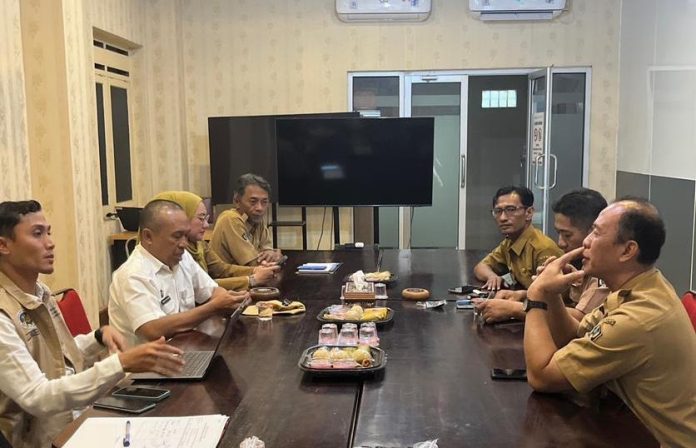
Andy Mulya, Head of Livestock Cultivation and Development at the Blitar Livestock and Fisheries Agency, said the issue became a key topic during a coordination meeting at the agency’s office.
The meeting followed earlier discussions held with the deputy regent in Kanigoro. Representatives from BGN headquarters, regional government agencies, development planners, agricultural officials, and MBG coordinators attended the session.
“The meeting was a follow-up to agreements discussed earlier. The BGN team instructed us to immediately prepare cooperation agreements between farmer cooperatives and SPPG operators,” Andy said on Monday.
According to Andy, officials will allocate food supply areas based on each cooperative’s operational coverage and membership capacity.
This system aims to distribute business opportunities fairly among local farmer groups. At the same time, it seeks to ensure a stable and sustainable supply of eggs for the MBG program.
“For the allocation of SPPG service areas, we will adjust the distribution based on each cooperative’s working area and the number of members it has,” he explained.
Meanwhile, the Blitar Regency Government has issued a circular letter addressed to farmer cooperatives and SPPG operators.
The document serves as a coordination framework and supports faster implementation of partnerships in the field.
“We have already distributed the circular letter as a foundation for coordination and to accelerate the implementation process,” Andy added.
Furthermore, local authorities expect the partnership model to increase participation from small and medium-sized poultry farmers.
Officials believe stronger farmer involvement will help secure food supplies for the national nutrition program while creating new economic opportunities in rural communities.
In addition, the initiative could improve farmer incomes and strengthen the regional economy by expanding market access for locally produced eggs.
The cooperation plan reflects the government’s effort to align national nutrition goals with local economic development. If implemented successfully, the program could provide long-term benefits for both MBG beneficiaries and poultry farmers across Blitar Regency.