
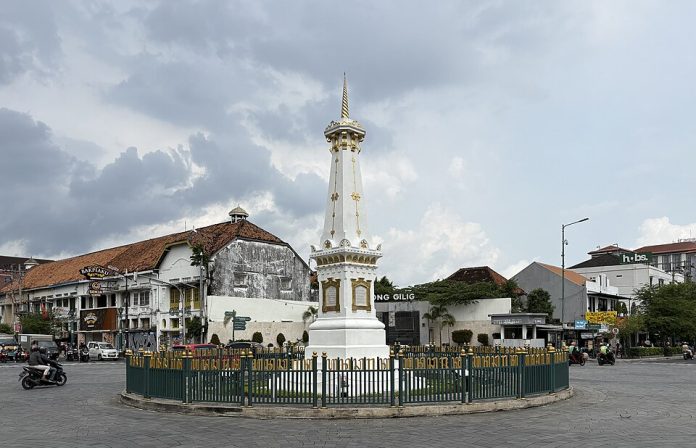

RADAR TULUNGAGUNG – The Yogyakarta Special Region remains the only province in Indonesia whose governor and deputy governor inherit their positions through a royal succession system. The region earned this status through its decisive support for the Republic during Indonesia’s struggle for independence. The special status has survived political transitions, constitutional reforms, and decades of debate, making Yogyakarta one of the most distinctive administrative regions in Southeast Asia.
Unlike other provinces, the Yogyakarta Special Region enjoys constitutionally recognized privileges that stem from the historical role the Yogyakarta Sultanate and the Pakualaman Duchy played in safeguarding Indonesia during its formative years. Law No. 13 of 2012 reaffirmed those privileges.
The region’s unique position continues to receive broad support from local residents and the central government, reflecting a historical relationship that dates back to the birth of the Indonesian state.
How Yogyakarta Earned Its Special Status
The origins of Yogyakarta’s special status trace back to the establishment of the Yogyakarta Sultanate in 1755 following the Giyanti Agreement, which divided the Mataram Kingdom. Long before Indonesia declared independence, the Sultanate operated as a recognized political entity under Dutch colonial administration.
After Indonesia proclaimed independence on August 17, 1945, Sultan Hamengkubuwono IX quickly expressed support for the new republic. In a landmark declaration on September 5, 1945, the Sultan formally announced that the Yogyakarta Sultanate would join Indonesia.
The decision carried enormous significance because the Sultanate possessed the institutional capacity to remain autonomous. Instead, Sultan Hamengkubuwono IX chose integration into the republic, a move historians widely regard as an act of statesmanship that strengthened Indonesia’s fragile national unity.
President Soekarno immediately recognized Yogyakarta’s unique position within the new state. That recognition later helped shape constitutional provisions that acknowledge regions with special historical characteristics.
Supporting Data and Historical Background
Yogyakarta’s contribution extended far beyond political declarations. During the Indonesian National Revolution, the city became the temporary capital of the Republic of Indonesia after the central government relocated from Jakarta on January 4, 1946.
Between 1946 and 1949, Yogyakarta served as the center of republican resistance against Dutch efforts to re-establish colonial control. The Sultanate provided facilities, financial assistance, and logistical support for the national government at a time when the republic faced severe threats to its survival.
One of the most important moments during this period was the General Offensive of March 1, 1949, which demonstrated to the international community that Indonesian forces remained capable of challenging Dutch military control. The operation helped strengthen diplomatic efforts that eventually led to Dutch recognition of Indonesian sovereignty on December 27, 1949.
Yogyakarta’s legal status was formally reinforced through Law No. 3 of 1950, which established the Special Region of Yogyakarta. The law recognized the historical role of the Sultanate and Pakualaman while integrating both institutions into Indonesia’s provincial governance structure.
The region also became an early testing ground for democratic practices. In 1951, Yogyakarta held one of Indonesia’s earliest local legislative elections, achieving voter participation reportedly reaching nearly 88 percent, according to historical records cited by scholars.
Reactions, Political Debate, and Present-Day Impact
The special status of Yogyakarta has periodically sparked debate, particularly regarding the appointment of the governor and deputy governor. Unlike other provinces where leaders are elected, the reigning Sultan of Yogyakarta serves as governor while the reigning Duke of Pakualaman serves as deputy governor.
Questions surrounding this arrangement intensified during the Reformasi era following the fall of President Soeharto in 1998. However, strong public support in Yogyakarta repeatedly influenced national policy discussions.
A major milestone came with the passage of Law No. 13 of 2012, which formally codified Yogyakarta’s privileges. The legislation confirmed the hereditary leadership model and granted special authority in areas including governance, culture, land affairs, and spatial planning.
Supporters argue that the arrangement preserves local traditions while maintaining stability and strengthening regional identity. Critics have occasionally questioned whether hereditary leadership aligns with modern democratic principles, but the system continues to enjoy significant legitimacy within the province.
Today, Yogyakarta remains widely known as Indonesia’s cultural capital and a major educational center, hosting more than 100 higher education institutions. Its special status is viewed by many residents as both a historical reward and a practical framework for preserving the region’s cultural heritage while contributing to national unity.
The story of the Yogyakarta Special Region ultimately reflects a unique political compromise forged during Indonesia’s struggle for independence, one that continues to shape the province’s identity and governance more than seven decades later.