
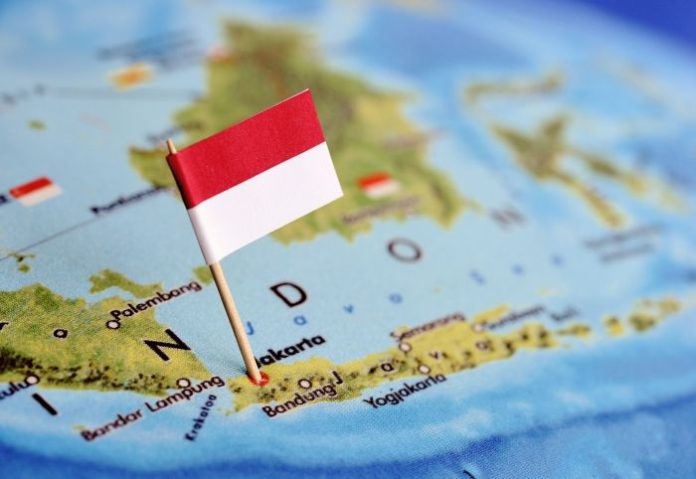

JAKARTA – Indonesia geography facts are capturing global attention as new data reveals the country’s extraordinary natural scale, from more than 17,000 islands to some of the most active volcanic zones on Earth, highlighting both its immense potential and ongoing environmental and development challenges.
These Indonesia geography facts underscore the country’s unique position as the world’s largest archipelago, with 17,380 islands recorded as of May 2025. Despite this vast territory, experts note that only a small portion is inhabited, raising questions about infrastructure, inequality, and regional development.
Beyond its sheer size, Indonesia geography facts also reveal a nation shaped by geological extremes—where oceans dominate land, tectonic forces remain active, and biodiversity thrives across thousands of ecosystems.
A Vast Archipelago Shaped by Geography and Diversity
Indonesia’s identity as the world’s largest archipelago is one of the most defining Indonesia geography facts. With more than 17,000 islands stretching between Asia and Australia, the country is classified as a transcontinental state, bridging both Asia and Oceania.
The nation is also one of the most culturally diverse in the world, home to over 740 ethnic groups and more than 700 regional languages. “This level of diversity is rare globally and reflects centuries of migration and cultural exchange,” observers note.
Geographically, Indonesia sits between the Indian and Pacific Oceans, making it a critical maritime crossroads. This strategic position has historically turned the archipelago into a hub for trade, cultural interaction, and geopolitical competition.
The population structure adds another layer of significance. With more than 165 million people under the age of 30, Indonesia has one of the largest youth populations globally, presenting both an economic opportunity and a policy challenge.
Extreme Natural Features and Geological Phenomena
Among the most striking Indonesia geography facts is the country’s position on the Pacific Ring of Fire, home to between 130 and 220 active volcanoes. This makes Indonesia one of the most volcanically active regions in the world.
Historical eruptions have had global consequences. The eruption of Mount Tambora in 1815, for example, killed an estimated 90,000 people and triggered climatic disruptions felt as far as Europe. Meanwhile, the 1883 eruption of Krakatoa produced what is widely described as the loudest sound in recorded history, heard thousands of kilometers away.
Indonesia is also home to extreme natural formations. Lake Toba in North Sumatra, formed by a massive volcanic eruption around 74,000 years ago, spans roughly 100 kilometers and is considered one of the largest volcanic lakes on Earth. In Sulawesi, Lake Matano reaches depths of about 590 meters, making it one of the deepest lakes in Southeast Asia.
Another unique feature is Puncak Jaya in Papua, the only location in Indonesia with a permanent glacier. However, scientists warn that due to global warming, this ice cap could disappear as early as 2026.
Indonesia’s coastline, stretching over 108,000 kilometers, is the second longest in the world. Yet despite this advantage, the country continues to face paradoxes, including reliance on imported fish in certain regions.
Environmental Risks, Global Impact, and Strategic Importance
Indonesia’s geography brings both opportunity and risk. Its location along major tectonic boundaries makes it prone to earthquakes, volcanic eruptions, and tsunamis. At the same time, it possesses deep-sea features such as the Java Trench, reaching depths of around 7,450 meters.
The archipelago also plays a crucial role in global ocean circulation. Strong sea currents flowing between the Pacific and Indian Oceans act as a “marine highway,” redistributing heat and influencing global climate systems. Scientists say these currents can reach speeds of up to one meter per second, significantly faster than average ocean flows.
In addition, Indonesia shares land borders with several countries, including Malaysia, Timor-Leste, and Papua New Guinea, further emphasizing its geopolitical importance.
Environmental experts warn that many smaller islands—estimated to make up around 80% of Indonesia’s total—remain uninhabited and, in some cases, unnamed. Some have even appeared or disappeared due to volcanic activity and rising sea levels, a phenomenon rarely observed on such a scale elsewhere.
Indonesia’s geography also shapes daily life. The Kapuas River, stretching approximately 1,143 kilometers, serves as a vital transportation and economic lifeline for communities in Kalimantan.
Indonesia geography facts ultimately reveal a nation of contrasts—rich in natural resources yet facing complex environmental and developmental challenges. As global interest grows, analysts emphasize the importance of sustainable management to preserve this unique landscape.
“Indonesia is not just geographically vast—it is globally significant,” experts conclude, pointing to its role in climate systems, biodiversity, and regional stability.