
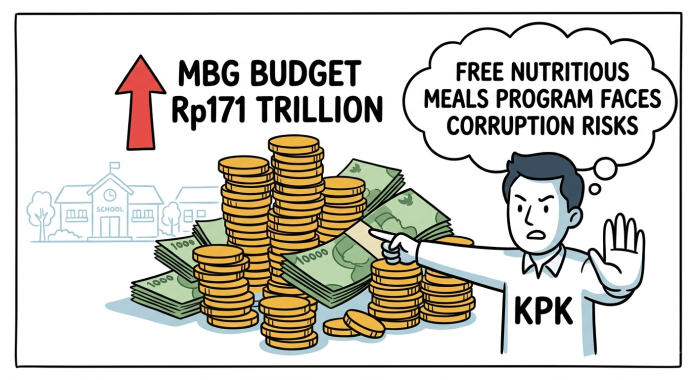

RADAR TULUNGAGUNG – The Indonesian Corruption Eradication Commission or Komisi Pemberantasan Korupsi has raised serious concerns over the governance of the Free Nutritious Meals Program, widely known as MBG, after finding major weaknesses in the implementation of the national strategic initiative.
The warning emerged from the agency’s latest assessment attached to the 2025 annual report released by the Monitoring Directorate. The report highlighted a high potential for conflict of interest in the selection process of Nutrition Fulfillment Service Units or SPPG partners, including public kitchens responsible for distributing meals under the MBG program.
The Free Nutritious Meals Program officially started in January 2025 under the coordination of the National Nutrition Agency. However, KPK investigators believe the governance model relies too heavily on a centralized approach that places the National Nutrition Agency as the dominant actor in decision-making.
According to the report, the centralized mechanism sidelines regional governments and weakens the checks-and-balances system in determining kitchen locations and operational partners. The condition could create loopholes for favoritism, collusion, and inefficient budget distribution.
KPK Highlights Massive Budget Increase
KPK also warned that the MBG budget expansion from Rp71 trillion to Rp171 trillion has not been matched by strong regulations and effective supervision systems.
Investigators argued that the rapid increase in funding could expose the program to financial leakages if the government fails to strengthen oversight mechanisms immediately. The anti-graft agency specifically criticized the use of the government assistance or BANPER scheme for budget distribution.
KPK stated that the funding mechanism extends the bureaucratic chain and potentially opens opportunities for rent-seeking practices. As a result, operational expenses and kitchen rental costs may reduce the portion of the budget allocated directly for nutritious food ingredients.
The agency fears the situation could undermine the core objective of the Free Nutritious Meals Program, which aims to improve public nutrition and food access for millions of Indonesians.
Weak Verification Process Raises Concerns
The report also revealed weaknesses in the verification process for MBG partner kitchens. KPK found that many SPPG facilities failed to meet technical standards required for food preparation and distribution.
The findings align with broader concerns regarding food safety supervision. KPK noted that limited involvement from regional Health Offices and Indonesia’s Food and Drug Monitoring Agency weakened monitoring efforts at the local level.
Without stricter supervision, the agency warned that the quality and safety of food distributed through the MBG program could face serious risks. The issue has become increasingly important because the program targets students and vulnerable communities across Indonesia.
Analysts believe poor oversight may eventually trigger public criticism if the government fails to ensure consistent food standards nationwide.
Government Urged to Issue Stronger Regulations
As part of its recommendations, KPK urged the government to immediately issue comprehensive regulations for the implementation of the Free Nutritious Meals Program.
The anti-corruption body recommended at least a presidential regulation or Perpres that can legally bind ministries, state agencies, and regional administrations involved in the program.
KPK believes stronger legal frameworks would improve transparency, clarify institutional responsibilities, and reduce overlapping authority between agencies. Clearer rules could also strengthen accountability in partner selection and financial management.
The agency emphasized that national strategic programs with massive budgets require transparent governance systems from the beginning. Otherwise, weak supervision could damage public trust and reduce the effectiveness of the initiative.
MBG Program Faces Growing Public Scrutiny
The MBG program remains one of the Indonesian government’s flagship social initiatives aimed at tackling malnutrition and improving food access. However, the latest findings from KPK have intensified public scrutiny over how the program operates on the ground.
Observers now question whether the government can maintain transparency while rapidly expanding the project nationwide. Several experts also argue that involving local governments more actively could help strengthen supervision and reduce potential abuse of authority.
Despite the criticism, the government continues pushing the program forward as a key national priority for improving public welfare and supporting long-term human resource development.
KPK’s latest warning may now pressure policymakers to accelerate regulatory reforms before the MBG budget continues expanding further in the coming years.