
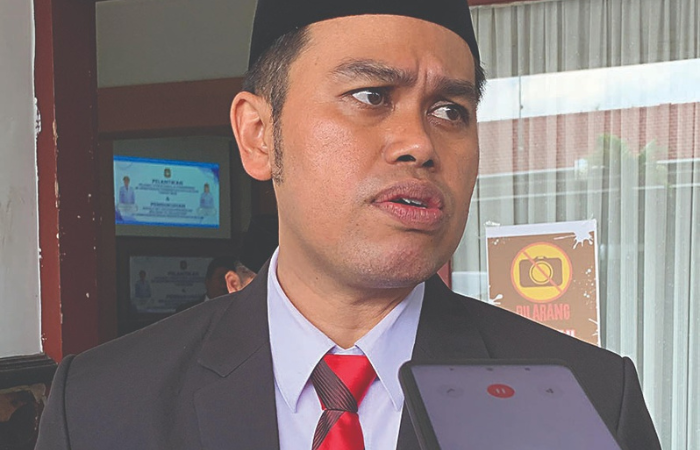

BLITAR – The Blitar City Government has launched a full review of its sports development strategy after a decline in results at the East Java Provincial Sports Week, while still distributing athlete bonuses to medal winners.
Speaking during the latest bonus handover, Syauqul Muhibbin said the city must treat the recent outcome as a serious evaluation point. He asked every sports federation, coach, and athlete to examine what caused the drop in ranking.
Blitar failed to meet its target of finishing inside the top 20 at the provincial event. The city ended the competition in 28th place, down from 18th in the previous edition.
Despite the lower ranking, several athletes still delivered medals across multiple categories. The Blitar contingent collected 37 medals in total, including eight gold medals, 13 silver medals, and 16 bronze medals.
The city government released performance bonuses on Friday as part of its appreciation program. Gold medal winners received Rp 30 million, silver medalists got Rp 22 million, and bronze medalists earned Rp 10 million each.
Muhibbin said the financial reward reflects the city’s support for athletes who have represented Blitar in regional competition. He added that the timing before Eid could also help athletes and their families.
“The government gives meaningful appreciation to athletes who achieved results. Gold medal winners receive Rp 30 million, and the payment comes before Eid so it can also be useful for them,” he said.
At the same time, he stressed that bonus payments should not create satisfaction without stronger future performance.
He said large incentives do not automatically guarantee better results in competition. Because of that, he wants all sports branches to review preparation methods and training quality.
“The reality is that our performance declined. This must become a shared challenge for all of us,” he said.
The mayor also urged athletes to stay focused on discipline and preparation instead of becoming distracted by non-sport issues.
He said athletes must show stronger commitment during training if Blitar wants to recover its competitive level in the next provincial event.
“Do not spend too much energy on other matters while results remain low. Athletes must show training spirit and use the right strategy to win medals,” he added.
Muhibbin also highlighted the need for more selective sports planning. According to him, the city should identify sports with realistic medal potential and strengthen support in those areas.
However, he said sports that have not yet produced medals should not be ignored.
They still need long-term coaching and regular training because future breakthroughs may come from unexpected disciplines.
He believes Blitar can improve if local officials combine sharper planning with consistent athlete development.
“What matters is strategy. We need to choose efficient sports with medal potential, but every athlete must continue training hard,” he said.
The city government is expected to continue discussions with sports associations in the coming months as part of its post-competition review.