
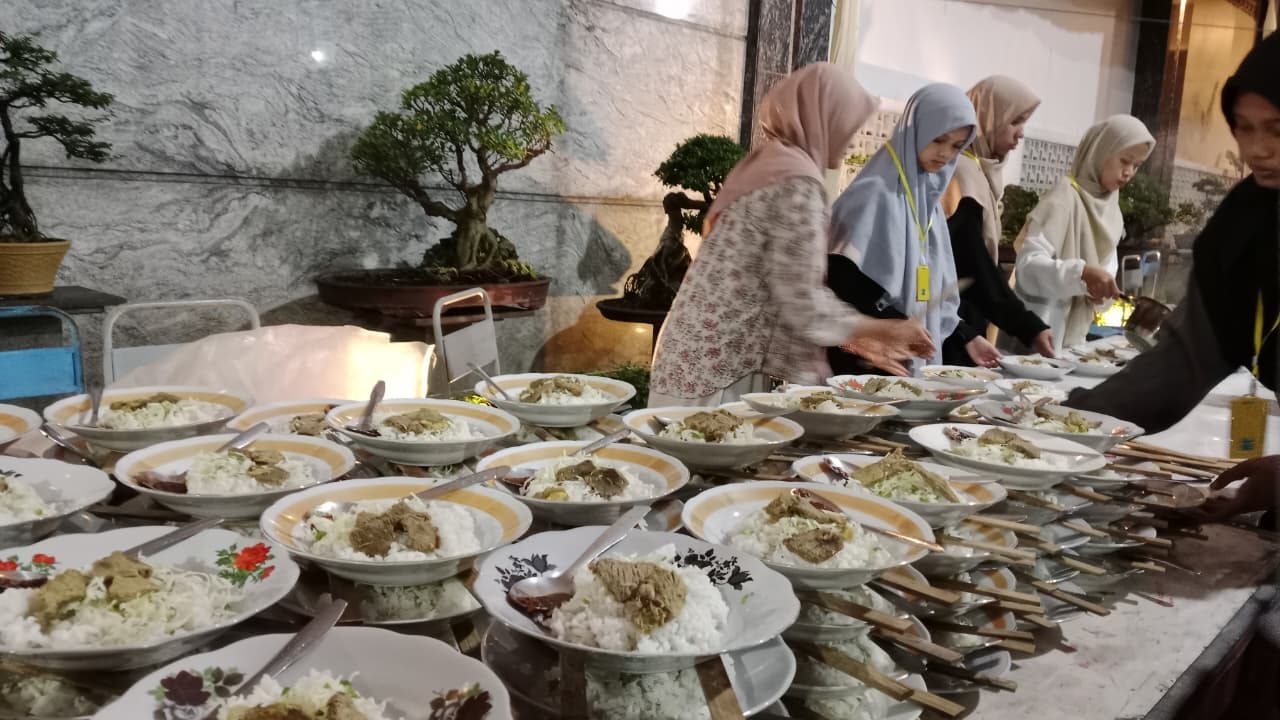

TULUNGAGUNG – Al Fatah Mosque free sahur program helps worshippers who stay overnight during the final days of Ramadan, offering meals for those performing late-night prayers.
Located in the center of Tulungagung, Al Fatah Mosque stays active even when the city becomes quiet after midnight. Many worshippers gather there for itikaf, a spiritual practice where Muslims spend the night praying during the last ten days of Ramadan.
Badri, one of the mosque volunteers, said the mosque has long served meals to visitors throughout the fasting month. Every evening, volunteers prepare more than 700 portions of iftar meals for worshippers and visitors.
These meals often help students living away from home as well as travelers who come to the mosque during Ramadan.
During the final ten nights of the fasting month, volunteers also prepare free sahur meals for worshippers who remain at the mosque overnight.
“We want to make things easier for them. Those who arrive at midnight for itikaf do not need to leave the mosque to search for food,” Badri said.
Volunteers usually start preparing sahur early so that the meals are ready before dawn. Around 3 a.m., the food is already available for worshippers.
Each night, the mosque prepares around 250 portions of sahur. The number is smaller than the iftar meals, but it still supports many people who spend the night in prayer.
Many of the visitors include students from outside Tulungagung and elderly residents who come to worship during the final nights of Ramadan.
“It may be fewer than the iftar meals, but it still helps those who stay here overnight,” Badri added.
Behind the program, the mosque kitchen operates through community cooperation. Volunteers cook the meals together using ingredients donated by worshippers.
Earlier this year, the price of several food ingredients increased sharply. Chili prices once reached Rp100,000 per kilogram at Ngemplak Market, yet the cooking activities continued.
Donations such as rice, eggs, and spices allow volunteers to prepare simple home-style dishes. The menu often includes meals like rawon beef soup, chicken dishes, and vegetable stew such as sayur lodeh.
The mosque also uses modern technology to make donations easier. Worshippers can contribute by scanning a QRIS digital payment code available in several parts of the mosque.
“We never set a fixed amount for donations. People can give whatever they wish,” Badri said.
For many visitors, the meal served at Al Fatah Mosque means more than food. For students living far from home and elderly worshippers, it offers warmth and support.
During the last ten nights of Ramadan, the mosque becomes a welcoming place for anyone who comes to pray, rest, and seek spiritual blessings.