
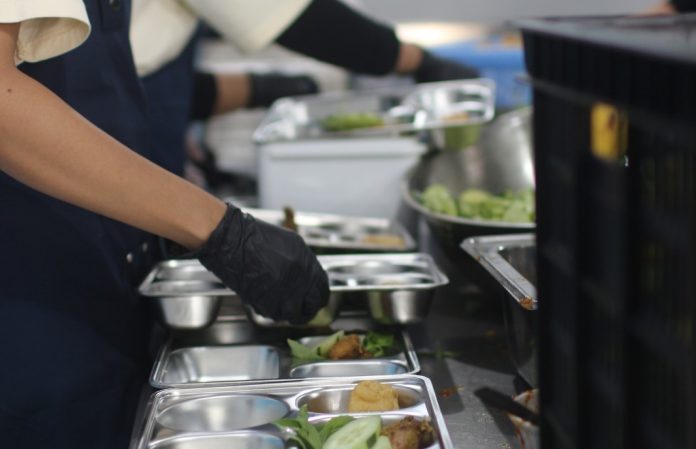

BLITAR – The temporary suspension of the Free Nutritious Meal Program (MBG) in Blitar City has not disrupted school activities, local officials say, despite a pause in food distribution that affected around 15,000 to 16,000 students.
The interruption occurred after eight Nutrition Fulfillment Service Units (SPPG) stopped operating. Administrative issues linked to Indonesia’s National Nutrition Agency (BGN) caused the suspension. Local authorities stressed that the problem stemmed from administrative processes rather than operational failures at the regional level.
Dindin Alinurdin, secretary of the Blitar City MBG Task Force, said SPPG operators did not formally report their financial difficulties to the local task force. However, schools received direct notifications about the temporary suspension.
“SPPG operators did not submit a direct report to the MBG Task Force. However, schools informed us that the providers had temporarily halted their activities,” Dindin said on Wednesday.
According to local officials, the pause did not trigger significant concerns among schools. The suspension coincided with the final weeks of the academic year. Student activities had already begun to decline ahead of the school break.
“Fortunately, schools have not reported major problems. The students who temporarily stopped receiving benefits were already entering a period with reduced school activities,” he explained.
The task force also responded to suggestions that affected students should receive meals from other SPPG units. Several facilities in Blitar City continue to operate normally.
Dindin said such a move could create new logistical challenges. Authorities only consider transferring student quotas when an SPPG permanently ceases operations. Temporary suspensions caused by administrative issues do not qualify.
Transferring thousands of students could overload other kitchens. The move could also create difficulties when suspended units resume operations. Officials would need to reorganize student allocations once again.
“If we move the quotas to another SPPG, the impact could be significant. The receiving unit could face a heavy workload. When the original SPPG resumes operations, reorganizing student allocations would become much more difficult,” Dindin said.
He added that the National Nutrition Agency controls all distribution quotas through a centralized system. Regional authorities cannot independently increase, reduce, or transfer beneficiaries.
For now, the Blitar City MBG Task Force is waiting for administrative verification in Jakarta. Officials hope the issue will be resolved before the new academic year begins.
“We will wait for the policy decision from the central government. Hopefully, this situation will be resolved soon so all student beneficiaries can receive services normally in the next academic year,” he said.
The MBG program remains one of Indonesia’s flagship initiatives. The program aims to improve student nutrition and support children’s health through free school meals.