
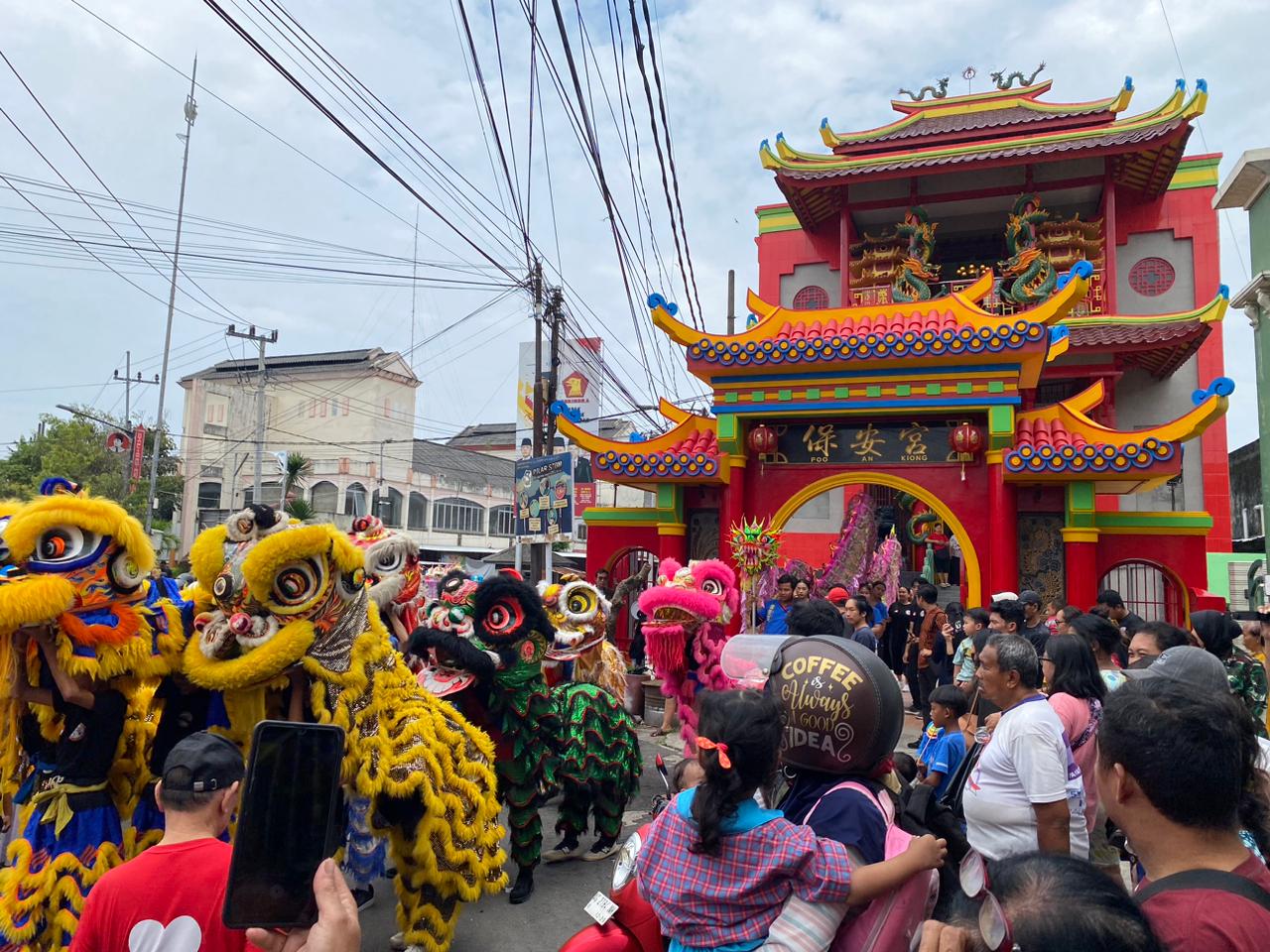

BLITAR – The Cap Go Meh parade in Blitar transformed the city’s main streets into a vibrant cultural stage. The event marked the final day of the Lunar New Year celebrations for the local Chinese-Indonesian community.
Crowds gathered along major roads in Blitar, also known as Bumi Bung Karno, from morning until midday. Performers showcased dynamic barongsai lion dances and two large liong, or dragon figures. Traditional music сопровed the procession, creating a festive atmosphere.
Daniel, coordinator of the Blitar barongsai community, said Cap Go Meh falls on the 15th and last day of the Lunar New Year.
“We close the celebration with a barongsai and liong parade so everyone can enjoy it,” he said on March 2.
Organizers deployed 10 barongsai teams and two liong this year. The parade covered about six kilometers. Last year’s route reached eight kilometers.
“We shortened the route for practical reasons,” Daniel explained. “However, the celebration’s meaning remains unchanged.”
Blitar has held the Cap Go Meh parade every year since 2007. The city paused the event during the Covid-19 pandemic. After restrictions eased, organizers revived the celebration.
Residents watched enthusiastically from the roadside. Some handed angpau envelopes to the dancers as a gesture of appreciation. The interaction added warmth to the procession.
Organizers view the Cap Go Meh parade in Blitar as more than entertainment. They see it as a symbol of unity in a diverse society.
Daniel compared the tradition to a local village cleansing ritual. Both express gratitude and hope for prosperity in the year ahead.
“We hope this event continues to strengthen togetherness,” he said.
As the final drumbeats echoed through the streets, the parade closed the Lunar New Year festivities. At the same time, it reaffirmed Blitar’s commitment to cultural harmony.