
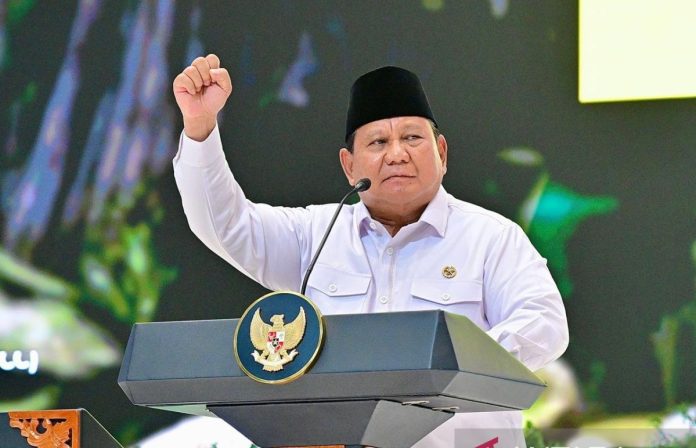

RADAR TULUNGAGUNG – The Indonesian government is under growing pressure after allegations of corruption surfaced in the MBG program, also known as the Free Nutritious Meals Program. Critics questioned the management of the massive national project after President Prabowo Subianto ordered the Presidential Staff Office to investigate potential corruption loopholes inside the program.
The issue became a heated topic during a televised discussion involving government representatives and anti-corruption activists. The debate focused on alleged irregularities in procurement, project management, and political involvement in MBG operations.
Acting Deputy III of the Republic of Indonesia Communication Agency, Kurnia Ramadhana, said the president’s order showed the government’s seriousness in safeguarding the MBG program. According to him, MBG carries enormous social and economic importance because it supports nutrition, public health, and job creation.
Kurnia explained that the government wanted to ensure the huge state budget allocated for MBG was used properly. He stressed that the administration welcomed criticism and allowed law enforcement agencies to investigate any suspected corruption tied to the program.
However, anti-corruption watchdog representatives argued that the response came too late. Researcher Wana Alamsyah from the Indonesian Corruption Watch claimed his organization had repeatedly warned about potential corruption risks in MBG since the early stages of implementation.
ICW Reveals Three Major Findings in MBG Program
According to Wana, ICW identified at least three major issues linked to the Free Nutritious Meals Program.
The first concerns alleged political patronage. ICW claimed several public officials and politically connected figures were involved in foundations managing MBG operational units. The organization alleged that some actors from political circles, law enforcement institutions, and military backgrounds benefited from the project.
The second issue involves suspected price markups in the construction of SPPG facilities, the operational kitchens supporting MBG distribution. ICW noted significant differences in construction costs, with some projects reportedly valued between Rp800 million and Rp2 billion.
The third allegation focuses on procurement and halal certification services. ICW recently submitted a corruption complaint to the Corruption Eradication Commission regarding suspected irregularities in procurement linked to MBG certification processes.
Wana argued that the government ignored public criticism for too long despite repeated reports about management problems. He said the administration should not only focus on minor violations but also investigate broader concerns involving political connections and potential conflicts of interest.
More Than 1,500 SPPG Units Suspended
Kurnia rejected claims that the government had been passive. He stated that more than 1,500 SPPG units had already been suspended by the National Nutrition Agency due to administrative violations and operational problems.
According to him, the suspensions proved that internal evaluations were already underway long before the latest public controversy emerged. He emphasized that administrative sanctions were part of efforts to improve MBG governance and protect program beneficiaries.
Kurnia also said the government had studied recommendations issued by the Corruption Eradication Commission. The recommendations reportedly included several governance improvements designed to strengthen transparency and accountability inside the MBG system.
Despite that explanation, critics questioned why the investigation was assigned to the Presidential Staff Office instead of directly involving the Corruption Eradication Commission.
Debate Over KSP and KPK Roles Intensifies
Wana argued that potential corruption cases should be handled by independent law enforcement institutions rather than administrative offices. He insisted that the Corruption Eradication Commission should take the lead because some law enforcement institutions allegedly had links to MBG-related foundations.
He warned that conflicts of interest could emerge if police or prosecutors handled investigations involving parties connected to the program. For that reason, ICW pushed for stronger involvement from the Corruption Eradication Commission to ensure impartial investigations.
Kurnia responded that the Presidential Staff Office only handled administrative monitoring and policy evaluation. He clarified that KSP had no authority to conduct criminal investigations or prosecutions.
According to him, the government remained open to legal action if investigators discovered evidence of corruption. He stressed that President Prabowo never prohibited law enforcement agencies from investigating MBG projects.
Calls Grow for Comprehensive Reform
The controversy surrounding the Free Nutritious Meals Program has triggered wider public debate about governance, transparency, and accountability in major national projects.
Critics demanded clearer regulations, stronger regional supervision, and concrete reform roadmaps to address recurring complaints. They also warned that public trust could weaken if corruption allegations continued without firm action.
Meanwhile, the government insisted that public criticism and recommendations would be used to strengthen MBG implementation moving forward. Officials claimed evaluations would continue to ensure the program delivers benefits without being overshadowed by corruption scandals.