
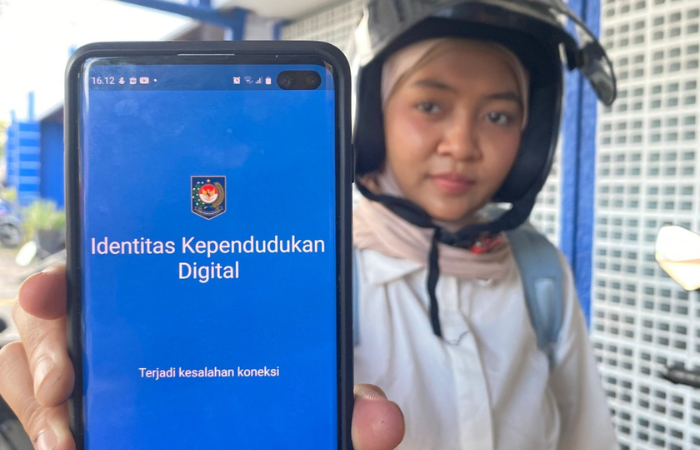

TULUNGAGUNG – The adoption of Digital Population Identity (IKD) in Tulungagung has reached around 20 percent of residents eligible for a national ID card, marking progress in the region’s transition toward digital public services.
Local authorities say the growing use of IKD reflects an important step in modernizing Indonesia’s population administration system. The application allows residents to store and access key identity documents directly through their smartphones.
Sriyono, Head of Information Management and Population Administration (PIAK) at the Tulungagung Population and Civil Registration Office (Dispendukcapil), said the current activation rate shows steady development.
“Right now, the activation of IKD in Tulungagung has reached around 20 percent,” Sriyono said during an interview at his office.
The Digital Population Identity (IKD) platform aims to simplify administrative processes that previously relied on printed documents and photocopies. Through the application, residents can store multiple civil registration documents in one digital system.
These include electronic ID cards (e-KTP), Family Cards (KK), and various civil registry certificates. Residents can access these documents instantly through their phones without repeatedly printing new copies when data changes occur.
“For example, when someone wants to update their photo or when marital status changes from single to married or divorced. If every change requires a new physical document, it becomes inefficient. With IKD, everything is already recorded digitally,” Sriyono explained.
Beyond serving as a digital ID, the application also provides access to various population administration services. Residents can submit requests independently without visiting village offices, district offices, or the civil registry agency.
Available services include family card printing requests, data updates such as blood type and education status, as well as migration administration through the Indonesian Citizen Transfer Certificate (SKPWNI). Residents can also request family card separation through the platform.
Once officials verify submitted documents, the system sends the files to the applicant’s email. Each document includes a barcode that verifies its authenticity.
“Residents can print the document themselves at home on A4 paper. To confirm authenticity, they only need to scan the barcode through the IKD application,” Sriyono said.
Despite the increasing adoption of Digital Population Identity (IKD) in Tulungagung, officials acknowledge several challenges in expanding its use. One major issue involves residents whose smartphones do not support the application.
Many users have limited storage space or still operate devices running Android versions below Android 8. Meanwhile, some iPhone users experience compatibility issues because their devices are not official Indonesian versions.
Authorities have also implemented strict security measures because the application stores sensitive personal data. For security reasons, the platform does not provide a “forgot PIN” feature.
“This application contains highly confidential personal data. If someone forgets their PIN, only authorized officers at Dispendukcapil or the district office can reset or delete it,” Sriyono said.
To increase adoption, the Tulungagung civil registry office continues to conduct outreach programs and provide direct activation services for residents.
Officers regularly visit villages, including remote mountainous areas. They also open service booths during public events such as community gatherings, weekend activities at local sports complexes, and government markets.
During these visits, officers bring special network equipment connected directly to the central government server, allowing residents to activate their Digital Population Identity (IKD) on the spot.