
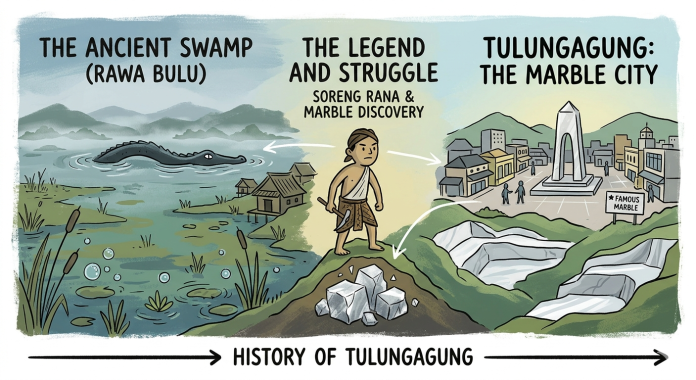

RADAR TULUNGAGUNG – Behind the modern image of Tulungagung as Indonesia’s famous Marble City lies a dramatic story filled with legends, floods, survival, and transformation. The history of Tulungagung continues to attract attention because many local stories describe the region as a massive swamp or inland sea in ancient times.
The tale of Tulungagung history has survived through generations and remains deeply connected to local identity. From mysterious floodwaters to the rise of fertile land and a booming marble industry, the region carries a fascinating narrative that blends folklore with historical memory.
Today, Tulungagung is widely recognized for its high-quality marble products, cultural heritage, and economic growth. However, many residents still believe the area once stood under vast stretches of water known as “Ngrowo” or “Namang Rowo.”
Tulungagung Once Believed to Be a Giant Swamp
According to local legends, the area now called Tulungagung was once covered by enormous stagnant water surrounded by mountains. Historians and local storytellers believe the basin-like geography caused rainwater to collect without proper drainage, eventually forming giant marshlands.
Communities living in the area reportedly adapted to difficult conditions. They built homes on higher ground, relied heavily on nature, and struggled with sudden floods, disease outbreaks, and limited transportation access.
Life in ancient Ngrowo was far from easy. The swampy environment shaped the daily lives of the people and forced them to survive in extreme conditions. Yet the challenges also created a strong communal spirit among residents.
The Wise Leader Who Changed Tulungagung
One of the most famous parts of Tulungagung history centers on the arrival of a wise leader believed to have connections with the powerful Majapahit Empire era.
In local folklore, this leader recognized the region’s hidden potential despite the overwhelming floodwaters. He then worked together with local communities to create waterways, drainage systems, and river channels that connected the area to the sea.
The massive project reportedly took years and demanded enormous effort from the people. Slowly, the water level decreased. Land that had remained submerged for generations finally emerged and became suitable for farming and settlement.
This transformation changed the future of the region forever.
The Meaning Behind the Name Tulungagung
The origin of the name Tulungagung also carries symbolic meaning. Local stories explain that the word “Tulung” means help, while “Agung” means great or noble in Javanese language.
Combined together, Tulungagung can be interpreted as “great help” or “noble assistance.” The name reflects the successful effort to overcome the devastating flood conditions that once dominated the region.
For local communities, the story represents not only human determination but also divine blessing. The draining of the swamp marked the beginning of agricultural growth, social development, and a more stable life for residents.
Marble Industry Turns Tulungagung Into Global Name
Over time, Tulungagung became famous for more than its legends. The region developed into one of Indonesia’s leading marble-producing centers.
The marble deposits formed through geological processes over millions of years. Today, Tulungagung marble is used for flooring, statues, home decorations, monuments, and artistic crafts distributed across Indonesia and overseas markets.
The marble industry remains one of the most important economic sectors in the region. Many local workers depend on marble mining and processing for their livelihoods.
Because of this success, Tulungagung eventually earned the nickname “Marble City.” The title symbolizes not only natural wealth but also resilience and transformation from a once-flooded land into a thriving modern region.
Colonial Era and Local Resistance
Like many regions in Indonesia, Tulungagung also experienced difficult periods during colonial rule. Historical accounts mention forced labor policies, heavy taxation, and exploitation of natural resources imposed on local communities.
Despite these pressures, the people of Tulungagung continued protecting their traditions, language, and cultural identity. Small-scale resistance movements and cultural preservation efforts became symbols of local resilience.
The spirit of unity remained strong even after Indonesian independence in 1945. Communities worked together to rebuild villages, improve infrastructure, and strengthen regional development.
Tulungagung History Still Lives Today
Even today, Tulungagung history continues to live through folklore, traditional ceremonies, and cultural storytelling. Many residents believe preserving historical narratives is essential for protecting regional identity.
Modern Tulungagung now stands as a growing and dynamic region in East Java. Yet behind the urban development and marble industry, the ancient story of Ngrowo remains unforgettable.
The legend serves as a reminder that great change often comes from struggle, cooperation, and hope. From a flooded swamp to an internationally recognized Marble City, Tulungagung’s journey remains one of the most fascinating historical stories in Indonesia.