
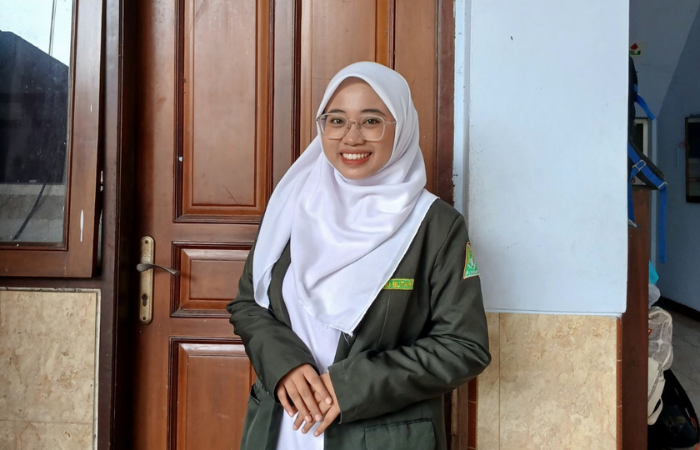

BLITAR – Sofia Annas Ashari now leads the Blitar City branch of the Indonesian Female Student Association (IPPNU) for the 2025–2027 term. Through her leadership, Sofia Annas Ashari places youth mental health and cadre development at the center of the organization’s agenda.
For Sofia, leadership goes beyond executing programs. She believes a leader must keep the organization alive, relevant, and meaningful for the next generation.
She has joined Nahdlatul Ulama (NU)-affiliated youth organizations since 2017. Over the years, she completed cadre training from the commissariat level to the city branch. Those experiences shaped her perspective and strengthened her leadership skills.
As a student at Sayyid Ali Rahmatullah State Islamic University in Tulungagung, Sofia promotes a progressive and forward-looking vision. She urges members to strengthen their knowledge, character, and practical skills. According to her, strong competence helps young people face rapid social change.
“Any action without strong knowledge will not succeed. Therefore, the organization must become a space to learn and grow,” she said.
Sofia directs her programs toward cadre strengthening, literacy improvement, and soft skills training. At the same time, she highlights teenage mental health as a serious concern.
She sees growing academic pressure and digital exposure as real challenges for students. For that reason, IPPNU Blitar plans to include mental health discussions and awareness campaigns in its activities.
Moreover, Sofia wants the organization to serve not only its members but also students across Blitar, widely known as “Bumi Bung Karno.” She believes youth organizations must deliver tangible social impact.
She also stresses the importance of balancing tradition and change. NU values, she says, must remain strong. However, the organization must also adapt to modern realities.
“We must maintain good traditions, but we also need the courage to adopt change so the organization remains relevant,” said Sofia, who lives in Pakunden, Sukorejo District.
Sofia encourages female students to take part in organizational life. She believes organizations teach responsibility, communication, and leadership in practical ways.
She also reminds young people not to fear the process. Every experience, she says, shapes character and builds confidence.
“No good effort is ever wasted. What we plant in an organization will return to us someday. Young people should not be afraid to get involved,” she concluded.